Complex Cervical Conditions Require More Than Decompression—They Require Stability

For certain cervical spine conditions, relieving nerve or cord compression is only part of the solution. When instability, deformity, trauma, or multilevel pathology is also present, the spine needs to be stabilized as well. Posterior Cervical Fusion addresses both needs through a single posterior approach, using advanced instrumentation to restore and maintain proper spinal alignment over the long term.  At Gerling Spine Care and Research Institute, Manhattan patients facing these complex clinical scenarios have access to a team with the surgical depth and research pedigree to handle them well. Contact our Manhattan office today to schedule a consultation and learn whether Posterior Cervical Fusion is the right solution for your condition.

What Is Posterior Cervical Fusion?

Posterior Cervical Fusion is a surgical procedure that stabilizes the cervical spine by permanently joining two or more vertebrae through an incision at the back of the neck. Screws inserted into the vertebrae on both sides are connected by stabilizing rods, and a bone graft is added alongside the vertebrae to encourage biological fusion over time. The result is a solid, permanent construct that eliminates unstable or painful motion at the treated levels.

How Posterior Cervical Fusion Works

The patient is positioned face down, and the surgeon accesses the spine from the back of the neck. Following any necessary decompression of the spinal cord or nerve roots, screws are placed bilaterally into the vertebrae and connected by rods that hold the spine in proper alignment. Bone graft material is laid alongside the instrumented levels to promote solid fusion. The combination of immediate mechanical stability and gradual biological fusion produces a construct that is designed to last.

When a Posterior Approach Is the Right Choice

The posterior approach is preferred over anterior techniques when the pathology is located toward the back of the spinal canal, when multiple levels require simultaneous stabilization, when significant deformity or instability is present, or when prior anterior surgery has already been performed, and additional stabilization is needed. It is also the approach of choice for certain traumatic injuries and revision cases.

We’re here to help you move forward.

Contact Us
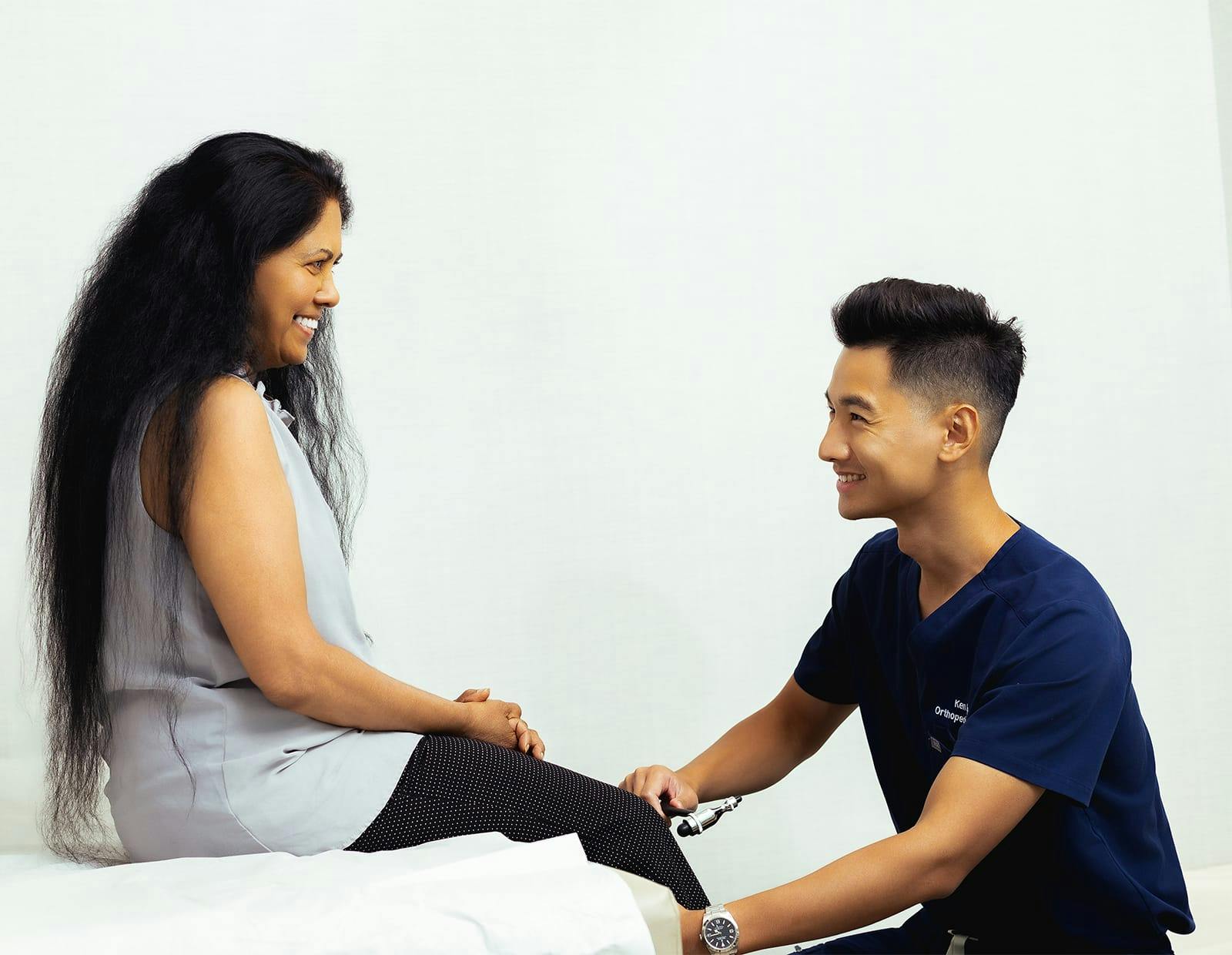
Healthcare provider in navy scrubs using a reflex hammer to assess a patient's knee response during a physical exam

Conditions Treated With Posterior Cervical Fusion

Posterior Cervical Fusion addresses a broad range of complex cervical spine conditions, including:

  • Multilevel cervical spondylotic myelopathy requiring both decompression and stabilization
  • Cervical instability from degenerative disease, trauma, or congenital factors
  • Cervical deformity, including kyphosis, requiring realignment and fusion
  • Cervical fractures or dislocations
  • Revision surgery following failed prior cervical procedures
  • Adjacent segment degeneration following previous anterior fusion
  • Spinal tumors or infections compromising cervical stability
  • Rheumatoid arthritis with cervical involvement
Are You a Candidate for Posterior Cervical Fusion in Manhattan?

Candidates for Posterior Cervical Fusion typically present with multilevel cervical pathology, significant neurological symptoms, or structural instability that has not responded to conservative management and cannot be adequately addressed through an anterior approach alone. Candidacy also depends on overall spinal alignment, bone quality, prior surgical history, and general health.  Patients with isolated single-level anterior pathology, or those whose condition is better suited to an anterior approach, will be directed accordingly. In some cases, a combined anterior and posterior procedure is the most appropriate solution, and our Manhattan team has the experience to plan and execute these complex surgeries effectively. Our team will conduct a thorough evaluation before making any recommendation, including a detailed review of imaging and full medical history.

Banner media

What to Expect From Posterior Cervical Fusion in Manhattan

Posterior Cervical Fusion is a carefully planned procedure, and our Manhattan team prepares every patient thoroughly for what lies ahead.

Before Your Posterior Cervical Fusion

Your consultation will include a comprehensive review of your symptoms, imaging, and treatment history. Our surgeons explain the procedure in full, discuss all available alternatives, and walk through expected outcomes honestly before any surgical decision is made.

The Day of Your Surgery

The procedure is performed under general anesthesia. Procedure length depends on the number of levels being fused and whether decompression is performed simultaneously. Most patients remain in the hospital for one to two days following surgery.  Our commitment to operating room efficiency means less time under anesthesia and a smoother transition to recovery.

Recovering After Your Procedure

Most patients begin to notice improvement in neurological symptoms within two to four weeks of surgery. Return to light activities typically occurs within a few weeks, with more physically demanding work requiring several months.  Physical therapy is an important part of recovery, helping restore strength and supporting long-term function. Full fusion, confirmed by imaging, generally takes several months to a year or more, depending on the number of levels involved.

Doctor media

Why Choose Gerling Spine Care and Research Institute?

Posterior cervical fusion is among the more technically demanding procedures in spinal surgery, requiring precise instrumentation, thorough preoperative planning, and a clear understanding of how each decision affects long-term spinal alignment and function.  Our team brings all of that to every case, along with the research depth of an institute that has contributed more than 300 peer-reviewed publications and holds leadership positions in CSRS, NASS, and LSRS. Manhattan patients can be confident they are in expert hands.

Posterior Cervical Fusion Frequently Asked Questions

How is posterior cervical fusion different from ACDF?

ACDF approaches the cervical spine from the front and is typically used for one or two-level anterior pathology. Posterior cervical fusion approaches from the back and is better suited for multilevel conditions, posterior pathology, instability, deformity, or cases where anterior surgery alone would not provide sufficient stabilization.

Will posterior cervical fusion limit my neck movement?

Fusion permanently eliminates motion at the treated levels, and the more levels that are fused, the greater the potential impact on overall neck flexibility. Most patients find that the relief from pain and neurological symptoms significantly outweighs any reduction in range of motion, and our team will set realistic expectations during your consultation.

How long does it take for the fusion to become solid?

Biological fusion is a gradual process. Patients typically feel meaningfully better well before fusion is fully confirmed on imaging, which can take anywhere from several months to up to two years, depending on the individual and the number of levels fused.

Can posterior cervical fusion be combined with other procedures?

Yes. Posterior cervical fusion is frequently combined with laminectomy or foraminotomy to decompress the spinal cord or nerve roots simultaneously. In some cases, it is performed as part of a combined anterior and posterior surgery. Your surgeon will determine the appropriate combination based on your specific anatomy and diagnosis.

What are the risks of posterior cervical fusion?

As with any spinal surgery, risks include infection, bleeding, nerve injury, and hardware complications. Our emphasis on preoperative planning, minimally invasive technique where applicable, and operating room precision is designed to minimize these risks. All potential risks and benefits will be discussed in detail during your consultation.

We're here to help you move forward.

Relief starts with quality orthopedic care. Contact us today to take the next step toward a more active, pain-free life.

Schedule Appointment (opens in a new tab)
Contact us media
Accessibility: If you are vision-impaired or have some other impairment covered by the Americans with Disabilities Act or a similar law, and you wish to discuss potential accommodations related to using this website, please contact our Accessibility Manager at 201-201-7246.
Contact Us