Persistent Lower Back and Pelvic Pain May Be Coming From Your SI Joint

The sacroiliac joint is one of the most commonly overlooked sources of chronic lower back, buttock, and pelvic pain. Because its symptoms closely resemble those of lumbar disc disease and nerve root compression, many patients spend months or years in treatment directed at the wrong target. When a systematic diagnostic evaluation confirms the SI joint as the source and conservative care has not provided lasting relief, SI Fusion offers a precise, minimally invasive path to lasting stabilization.

At Gerling Spine Care and Research Institute, New Brunswick patients benefit from a team that takes diagnostic accuracy as seriously as surgical technique. Contact our New Brunswick office today to find out whether SI Fusion is right for you.

What Is Sacroiliac Fusion?

Sacroiliac Fusion is a minimally invasive procedure that permanently stabilizes the SI joint by placing titanium implants or bone graft material across the joint under fluoroscopic or navigation guidance. This eliminates the painful micro-motion at the joint surface and promotes biological fusion over time, producing lasting structural stability and a significant reduction in the chronic pain and inflammation the joint was generating.

The Role of the Sacroiliac Joint

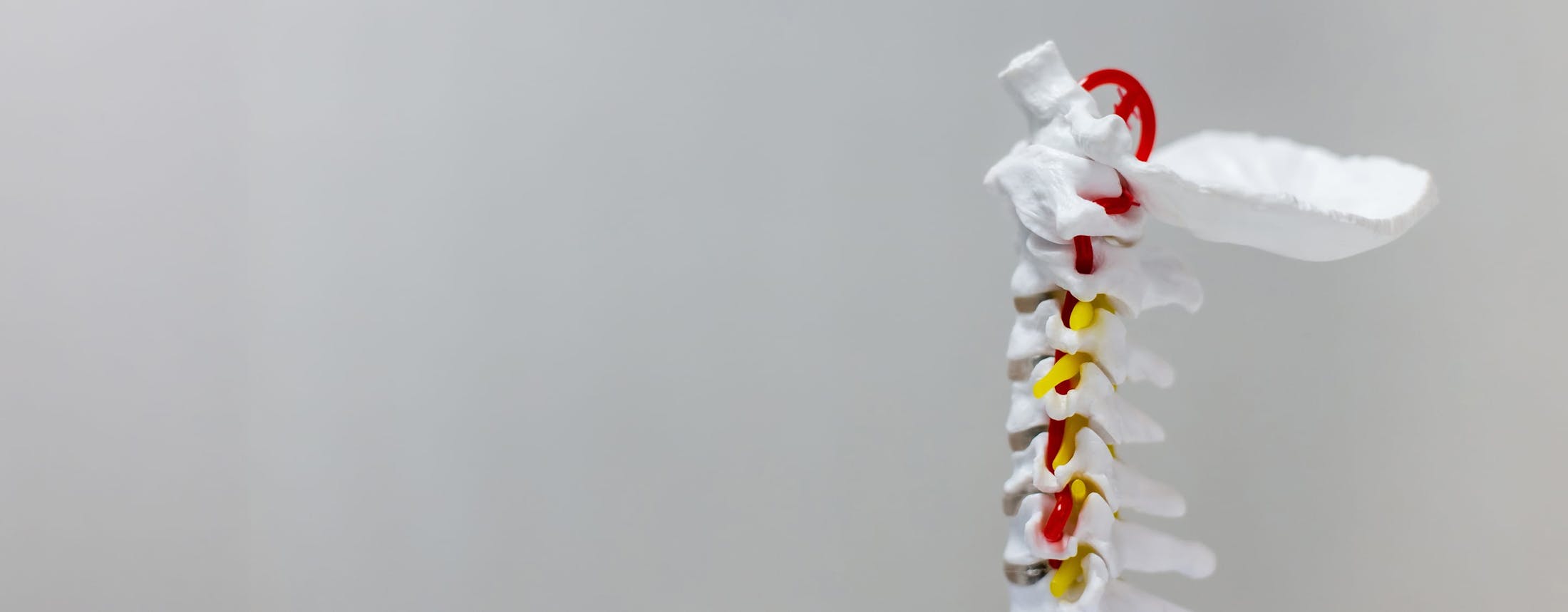
The SI joint connects the sacrum at the base of the spine to the iliac bone of the pelvis on each side of the body. Its primary function is stability rather than movement, transferring load from the upper body to the lower extremities through a dense network of surrounding ligaments. When this stability is compromised through injury, degeneration, or inflammation, the resulting pain can be severe, persistent, and difficult to attribute correctly without a targeted diagnostic process.

Why Minimally Invasive Technique Matters

The minimally invasive approach to SI fusion uses a small incision, causes significantly less tissue disruption than open surgery, results in reduced blood loss, and supports a faster and more comfortable recovery. Most patients are ambulatory within 24 hours and discharged within one to two days of the procedure.

We’re here to help you move forward.

Contact Us
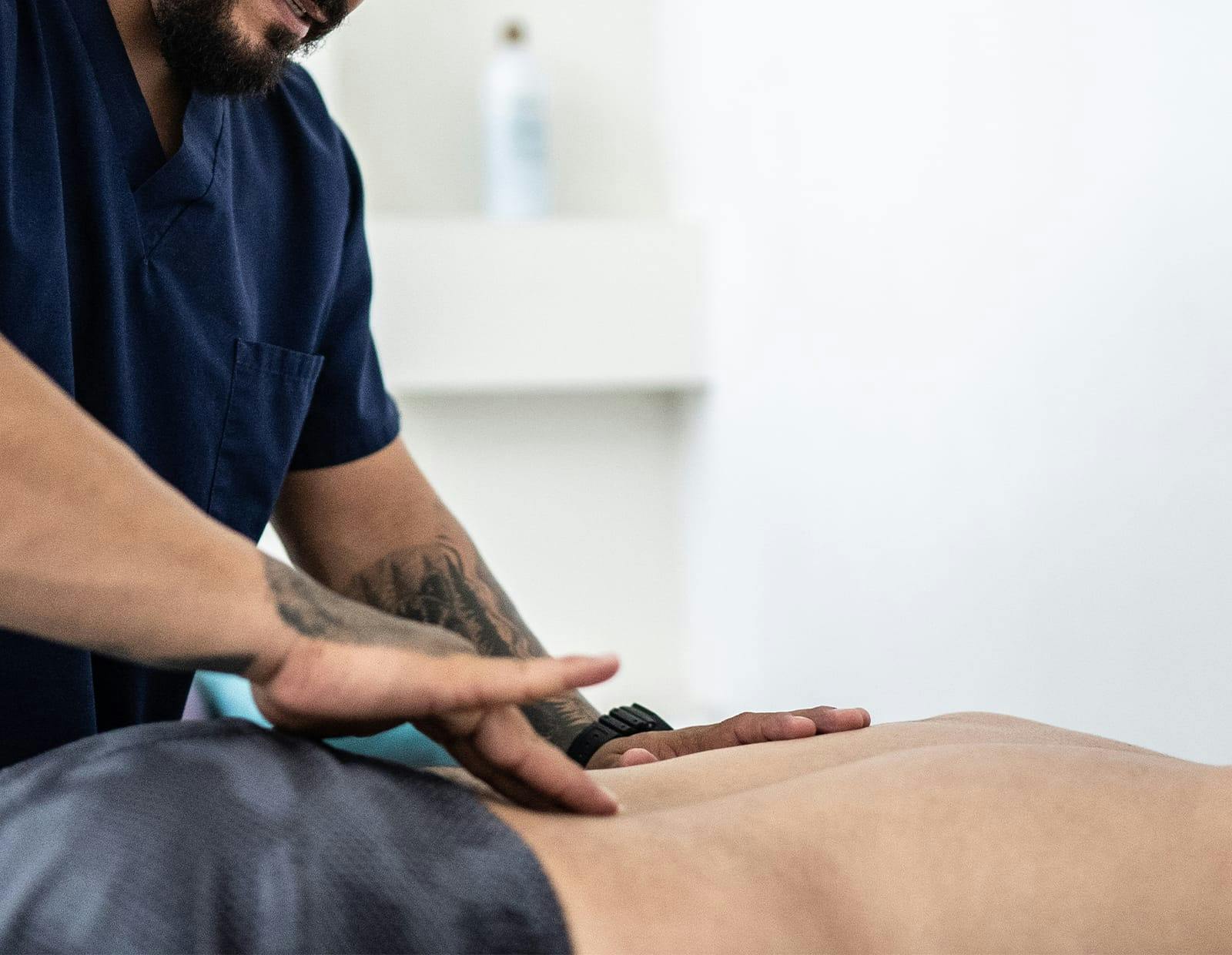
Medical professional applying pressure to someone's lower back

Conditions Treated With SI Fusion

SI Fusion is considered when the sacroiliac joint has been confirmed as the primary pain generator and conservative care has not produced lasting relief. Appropriate conditions include:

  • Sacroiliac joint dysfunction or instability
  • Sacroiliitis from degenerative or inflammatory causes
  • Degenerative arthritis of the SI joint
  • Post-traumatic SI joint injury or disruption
  • Post-partum SI joint instability
  • Adjacent segment stress following lumbar fusion at L5-S1
  • Chronic SI joint pain confirmed through diagnostic injection that has not responded to therapeutic injections

Are You a Candidate for SI Fusion in New Brunswick?

Good candidates have chronic lower back, buttock, or pelvic pain lasting six months or more, confirmed as originating from the SI joint through diagnostic injection, that has not responded adequately to physical therapy, anti-inflammatory medications, and therapeutic SI joint injections. Overall health, the specific cause of SI joint dysfunction, and the absence of other significant pain generators all factor into candidacy. Our New Brunswick team conducts a thorough evaluation before recommending surgical intervention, and will not proceed to fusion without the diagnostic foundation that gives the procedure its best chance of producing meaningful and lasting relief.

Banner media

What to Expect From SI Fusion in New Brunswick

From your first appointment through your full recovery, our team provides individualized guidance and support at every stage of your care.

Before Your Sacroiliac Fusion

Your consultation will include a detailed review of your symptoms, imaging, and prior treatments, including all prior injection history. Diagnostic SI joint injections are used to confirm the joint as the pain source before any surgical recommendation is made. Our team ensures every patient is fully informed and prepared before any decision is made.

The Day of Your Surgery

The procedure is minimally invasive and typically completed in under an hour. A small incision is made, and implants are placed across the SI joint under fluoroscopic or navigation guidance. Most New Brunswick patients are ambulatory the following day and discharged within one to two days.

Recovering After Your Procedure

Most patients notice meaningful improvement in pain within the first few weeks as stabilization reduces the micro-motion responsible for their symptoms. Full biological fusion of the SI joint, confirmed by imaging, typically takes six to twelve months. Physical therapy begins several weeks after surgery, focused on core stability and lower extremity strengthening. Our team monitors your progress closely and remains actively involved throughout recovery.

Doctor media

Why Choose Gerling Spine Care and Research Institute?

SI joint dysfunction rewards precise diagnosis and careful surgical technique in equal measure, and our New Brunswick team brings both. As part of a practice that manages the full spectrum of spine and joint conditions producing lower back and pelvic pain, we are uniquely positioned to confirm that the SI joint is the right target before recommending fusion.

For Central New Jersey patients, that combination of diagnostic rigor and surgical expertise is now available close to home.

Sacroiliac Fusion (SI Fusion) Frequently Asked Questions

How do I know if my pain is coming from the SI joint?

SI joint pain is typically felt just below the beltline on one side, worsens with prolonged sitting or transitional movements, and does not follow a clear nerve root pattern into the leg. A guided diagnostic SI joint injection is the most reliable confirmation of the SI joint as the pain source, and our New Brunswick team uses it as a central part of the diagnostic process.

How is SI fusion different from spinal fusion?

Both procedures join two bones together using implants and bone grafts, but SI fusion targets the joint between the sacrum and the iliac bone rather than the vertebrae of the spine. The surgical approach, implant system, and recovery profile are distinct from those of lumbar spinal fusion.

Will SI fusion limit my movement?

The SI joint has a very limited natural range of motion, so fusion has minimal impact on overall mobility for the vast majority of patients. The goal is to eliminate the painful micro-motion at the joint while preserving normal walking, sitting, and standing function.

What if my SI joint injections have not provided lasting relief?

Short-term relief from a diagnostic injection that confirms the SI joint as the pain source, even when that relief did not last, is a meaningful indicator of surgical candidacy. Patients with confirmed SI joint pain who have not achieved lasting therapeutic benefit from injections are often well-suited for surgical stabilization, and our team will review your full injection history as part of the evaluation.

How successful is minimally invasive SI fusion?

Research consistently shows that approximately 80% of appropriately selected patients achieve meaningful and lasting pain relief following minimally invasive SI fusion. Outcomes are strongest when the SI joint has been carefully confirmed as the primary pain generator and the procedure is performed by an experienced surgical team with a systematic approach to patient selection.

We're here to help you move forward.

Relief starts with quality orthopedic care. Contact us today to take the next step toward a more active, pain-free life.

Schedule Appointment (opens in a new tab)
Contact us media
Accessibility: If you are vision-impaired or have some other impairment covered by the Americans with Disabilities Act or a similar law, and you wish to discuss potential accommodations related to using this website, please contact our Accessibility Manager at 201-201-7246.
Contact Us