Your Lower Back Pain May Have Been Treated in the Wrong Place

The sacroiliac joint accounts for a meaningful portion of chronic lower back and pelvic pain, yet it is one of the most consistently overlooked structures in spine care. Many patients spend considerable time and effort pursuing treatment for lumbar disc disease, radiculopathy, or hip pathology, only to find their symptoms never fully resolve because the SI joint was never properly assessed. When a targeted diagnostic injection confirms the SI joint as the true source, and conservative management has not produced lasting change, sacroiliac fusion offers a direct, structural solution. At Gerling Spine Care and Research Institute, our West Orange team approaches SI fusion with the same commitment to diagnostic precision that defines every other aspect of our clinical practice. Contact our West Orange office today to schedule a consultation and find out whether SI fusion is the right solution for your condition.

What Is Sacroiliac Fusion?

Sacroiliac fusion works by placing small titanium implants across the SI joint through a minimally invasive incision, using real-time imaging to guide precise placement. The implants immediately stabilize the joint by eliminating the micro-motion at the joint surface that has been generating pain. Bone then gradually grows across those implants over the following months, converting the mechanically stabilized joint into one that is permanently and biologically fused.

The Role of the Sacroiliac Joint

The sacroiliac joint bridges the sacrum, the wedge-shaped bone at the base of the spine, and the iliac bones of the pelvis on either side. It is built for stability rather than mobility, and its primary job is to transfer the weight and forces of the upper body downward through the pelvis and into the legs. A thick network of ligaments holds it tightly together and limits its movement to only a few degrees. When that stability breaks down through injury, wear, or inflammation, the joint loses its ability to transfer load cleanly, producing pain that can be intense, poorly localized, and frequently mistaken for something originating in the lumbar spine or hip.

The Minimally Invasive Advantage

The minimally invasive technique used for SI fusion keeps the surrounding soft tissue largely intact, requires only a small incision, and produces minimal blood loss. Patients are not immobilized after surgery; most are walking within 24 hours. The recovery is meaningfully lighter than patients expect when they hear the word fusion, and considerably lighter than it would be with an open surgical approach.

We’re here to help you move forward.

Contact Us
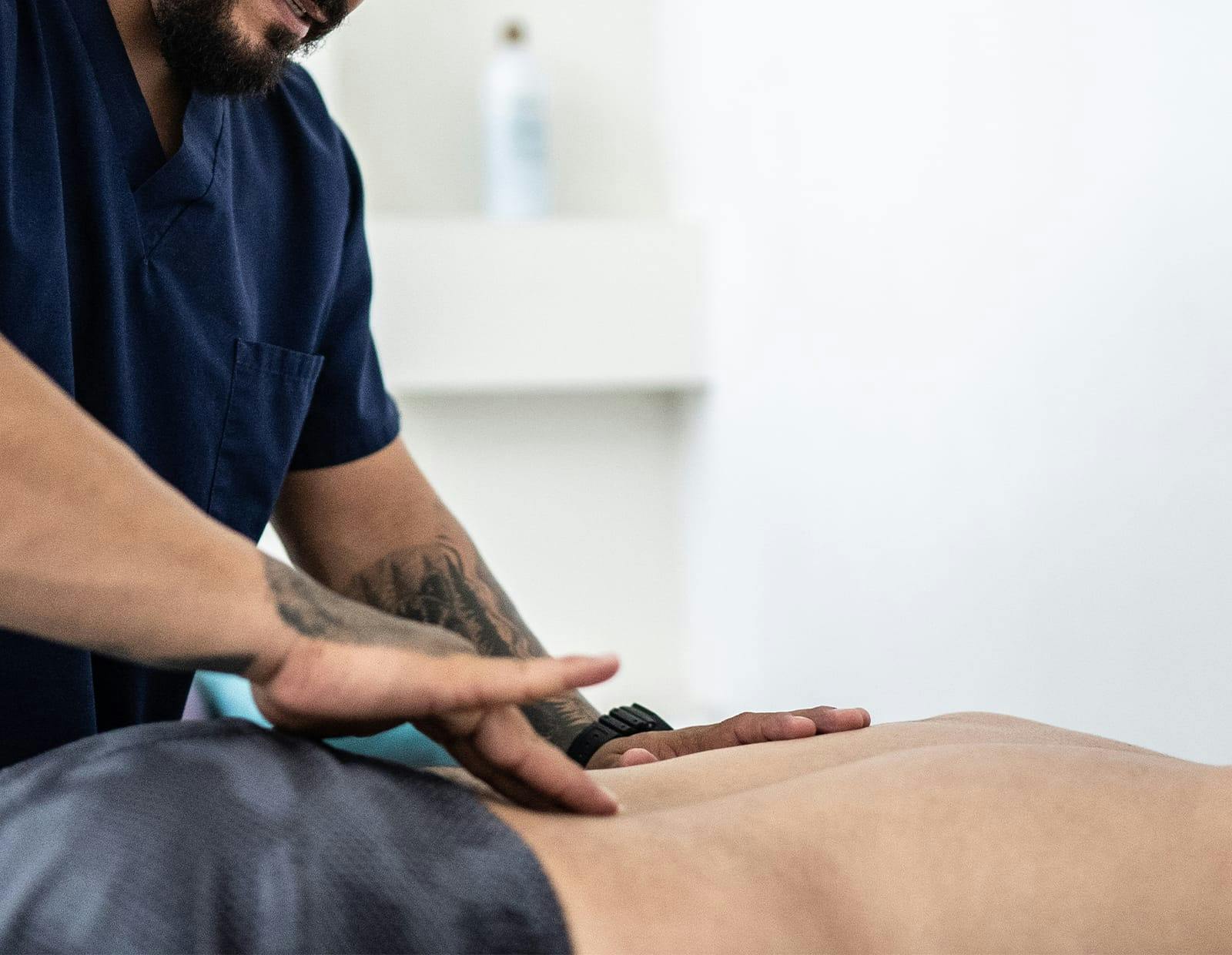
Medical professional applying pressure to someone's lower back

Conditions Treated With SI Fusion

SI fusion is reserved for patients in whom the SI joint has been confirmed as the primary source of pain and who have not achieved lasting improvement through conservative care. Conditions that may appropriately lead to surgical stabilization include:

  • Sacroiliac joint dysfunction or instability
  • Sacroiliitis from degenerative or inflammatory causes
  • Degenerative arthritis of the SI joint
  • Post-traumatic SI joint injury or disruption
  • Post-partum SI joint instability
  • Adjacent segment stress following lumbar fusion at L5-S1
  • Chronic SI joint pain confirmed through diagnostic injection that has not responded to therapeutic injections

Are You a Candidate for SI Fusion in West Orange?

The most important candidacy criterion for SI fusion is a properly confirmed diagnosis, and that confirmation must come from a diagnostic injection, not from imaging. Degenerative SI joint changes on MRI are common and do not by themselves establish that the joint is responsible for a patient's symptoms. Only a fluoroscopically guided injection that produces a clear, meaningful reduction in pain provides that confirmation with sufficient reliability to justify a surgical recommendation.

Candidates beyond that diagnostic threshold typically have symptoms that have persisted for at least six months, have not achieved lasting benefit from physical therapy or therapeutic injections, and do not have other active pain generators that could explain their symptoms. Our West Orange team works through each of these factors individually before arriving at any recommendation.

What to Expect From SI Fusion in West Orange

Before Your Procedure

The preoperative consultation at our West Orange location begins with a thorough review of your diagnostic injection history, specifically how the injection was performed, what was used, and what your pain response looked like in the hours that followed. That review is the clinical foundation on which the surgical recommendation is built. The consultation also covers your symptom history, your imaging, and your full treatment record. It ends with you having a clear, honest understanding of what the surgery involves, what recovery looks like, and what outcomes are realistic for your specific case.

The Day of Your Procedure

The procedure is completed through a small incision, typically in under an hour. Titanium implants are placed across the SI joint under fluoroscopic or navigation guidance, stabilizing the joint immediately. Most patients are up and walking the day after surgery and are discharged within one to two days.

Recovery After Your Procedure

The early post-operative period typically brings a noticeable change in the character of the pain. The sharp, movement-triggered symptoms that defined SI joint dysfunction—the pain with transitional movements, position changes, and prolonged standing—begin to ease as the implants stabilize the joint and eliminate the micro-motion driving them. The deeper biological process of fusion takes longer, generally requiring six to twelve months for bone to fully bridge across the implants and the joint to reach permanent stability. Physical therapy in the recovery period builds the muscular support around the stabilized joint and addresses any compensatory movement patterns that developed while the SI joint was dysfunctional.

Doctor media

Why Choose Gerling Spine Care and Research Institute?

Good SI fusion outcomes start before the patient ever enters the operating room. The diagnostic rigor that precedes the procedure, confirming through a properly performed injection that the SI joint is genuinely the source, and being willing to say no when that confirmation is absent, is what separates practices that produce consistent results from those that do not. At Gerling Spine Care and Research Institute, that standard of diagnostic honesty is built into how our West Orange team approaches every SI joint case, and it is reflected in the same research foundation and spine society leadership that backs everything else we do.

Sacroiliac Fusion Frequently Asked Questions

How can I tell if the SI joint is causing my pain?

The location and behavior of SI joint pain offer some useful clues—it tends to concentrate just below the beltline on one side, worsens predictably with certain movements, and generally does not produce the sharp radiating pattern into the lower leg that nerve root compression does. But those characteristics alone are not enough to make a confident diagnosis, because too many other conditions produce similar presentations. The diagnostic injection is what closes that gap. When a precisely placed injection into the SI joint produces a clear, reproducible reduction in pain, it provides a level of diagnostic certainty that no imaging study can match.

How is SI fusion different from lumbar spinal fusion?

The procedures address entirely different anatomical problems through different surgical corridors using different hardware. Lumbar fusion works within the spinal column, connecting vertebrae using pedicle screws, rods, and bone graft cages approached from the posterior or lateral spine. SI fusion works outside the spinal column, stabilizing the joint between the sacrum and the pelvis through a small incision on the side of the body using implants specifically designed for that anatomy. The only meaningful similarity is the general concept of using implants to create a permanent bony union; everything else about how they are performed, what they treat, and how patients recover from them is different.

Will SI fusion change how I move?

In practical terms, most patients notice no meaningful change in their mobility after SI fusion. The SI joint is not a significant contributor to the movements people rely on day to day. Its role is structural load transfer, not range of motion. The lumbar spine and hips drive the functional movement most patients are concerned about protecting. What the fusion eliminates is the painful micro-motion at the joint surface that was generating symptoms. Most patients describe the functional result as gaining the ability to move without pain rather than losing the ability to move freely.

My SI joint injections helped, but the relief didn't last—does that mean surgery might work?

Short-lived relief from a diagnostic injection is clinically meaningful, not a reason for discouragement. It tells the team two important things: the SI joint is genuinely involved in generating the patient's pain, and the problem is structural rather than purely inflammatory. Those two conclusions together make a strong case for surgical stabilization. Patients in this category, confirmed SI joint involvement with inadequate duration of relief from injections, are often among the most appropriate surgical candidates, because the diagnostic work has already been done. Our West Orange team will go through your injection history in detail during the evaluation.

How successful is minimally invasive SI fusion?

The published literature consistently reports meaningful pain relief in roughly 80 percent of patients who undergo minimally invasive SI fusion, but that figure only applies to patients who were properly selected. Studies that include patients chosen based on imaging findings alone, without diagnostic injection confirmation, show considerably worse outcomes. The procedural success rate and the diagnostic selection standard are inseparable. At our West Orange location, the commitment to proper diagnostic confirmation before surgery is not a precaution layered on top of the procedure — it is what makes the procedure work.

We're here to help you move forward.

Relief starts with quality orthopedic care. Contact us today to take the next step toward a more active, pain-free life.

Schedule Appointment (opens in a new tab)
Contact us media
Accessibility: If you are vision-impaired or have some other impairment covered by the Americans with Disabilities Act or a similar law, and you wish to discuss potential accommodations related to using this website, please contact our Accessibility Manager at 201-201-7246.
Contact Us