Disc Disease Doesn’t Mean You Must Lose Spinal Mobility

For many patients, spinal fusion is exactly the right answer for disc disease, and our team recommends it without hesitation when the clinical picture calls for it. But for a specific group of patients, particularly younger, active individuals with one or two affected levels and a spine that is otherwise healthy, fusion requires trading permanent motion loss for pain relief. Total disc replacement offers a different path. The damaged disc is removed and replaced with a precisely engineered implant that moves the way a healthy disc does, resolving the structural problem without the long-term biomechanical consequences fusion carries. At Gerling Spine Care and Research Institute, motion preservation is a genuine clinical priority at our West Orange location, one that shapes how our surgical team approaches disc disease for every appropriate candidate. Contact our West Orange office today to find out whether total disc replacement is the right solution for your condition.

What Is Total Disc Replacement?

Total disc replacement removes a disc that has degenerated beyond recovery and replaces it with a prosthetic implant designed to perform the same mechanical functions a healthy disc provides. The implant sits in the cleared disc space and is engineered to flex, extend, and rotate with the rest of the spine, maintaining the natural movement of the treated level rather than eliminating it. That is the fundamental biomechanical difference between disc replacement and fusion, and for the right patient, it is a clinically meaningful one.

Cervical Versus Lumbar Disc Replacement

Total disc replacement can be performed in the cervical and lumbar spine, but the two applications involve different clinical scenarios, different surgical approaches, and different recovery profiles.

Cervical Disc Replacement

Cervical disc replacement removes a disc that is compressing a nerve root or the spinal cord in the neck and replaces it with a prosthetic that restores disc height and preserves movement at that level. For appropriate candidates, it achieves the same decompressive result as ACDF without permanently eliminating motion at the treated cervical level.

Lumbar Disc Replacement

In the lower back, disc replacement applies to a more specifically defined patient group. It is most commonly performed at L4-L5 or L5-S1 when the disc itself has been confirmed as the primary pain source, a determination that requires careful clinical evaluation rather than imaging alone. The approach is through the front of the abdomen rather than the back, which affects both the surgical considerations and the recovery experience. The evaluation criteria, implant systems, surgical approaches, and recovery timelines differ meaningfully between cervical and lumbar disc replacement, and our West Orange team determines which is appropriate through a thorough individual evaluation.

The Long-Term Case for Motion Preservation

Fusion solves the immediate problem but creates a long-term one. When a spinal level is permanently immobilized, the levels above and below it absorb the mechanical load that the fused segment no longer shares. Over the years and decades, that added stress accelerates degeneration at those neighboring levels, a well-documented phenomenon that the research has consistently confirmed. Total disc replacement avoids this by keeping the treated level mechanically functional, distributing load across the spine the way it was designed to work, and reducing the cumulative stress on adjacent levels. For patients who are candidates for replacement, the long-term protection of the surrounding spine is a meaningful clinical benefit.


We’re here to help you move forward.

Contact Us
A female's back

Conditions Treated With Total Disc Replacement

Total disc replacement is indicated primarily for disc-related spinal pain that has not responded to conservative care. Appropriate conditions include:

  • Degenerative disc disease of the cervical or lumbar spine at one or two levels
  • Cervical or lumbar disc herniation causing persistent nerve compression
  • Discogenic neck or lower back pain in patients with preserved facet joints
  • Cervical radiculopathy or myelopathy in candidates suitable for disc replacement

Total Disc Replacement Versus Fusion

Both procedures treat disc disease effectively, but they are designed for different patients and different clinical situations. The decision between them is not about which is superior in general, but about which fits the individual in front of you.

Total Disc Replacement

Disc replacement works best for patients who are earlier in their degenerative process, where the disc is the primary problem and the surrounding architecture of the spine remains largely intact. Younger to middle-aged adults with one or two affected levels, healthy facet joints, adequate bone density, and no structural instability tend to be the strongest candidates. For these patients, the procedure addresses the disc while leaving the spine free to move naturally.

Spinal Fusion

Fusion is the more appropriate answer when the problem is more complex than disc replacement is equipped to handle. Significant instability, facet joints that have themselves become arthritic, pathology spanning three or more levels, prior surgery at the affected level, or anatomy that makes implant placement technically unsafe all point toward fusion rather than replacement. Fusion also carries a substantially longer clinical track record and remains the standard of care for a broad range of disc and instability conditions.

Background media

Are You a Candidate for Total Disc Replacement in West Orange?

Patient selection for total disc replacement requires a level of diagnostic precision that goes beyond most surgical evaluations. The window of appropriate candidacy is narrower than for fusion, and the factors that disqualify a patient are numerous and individually significant. Our West Orange team evaluates each candidate against the full set of relevant criteria, like disc levels involved, facet joint health, bone density, spinal stability on dynamic imaging, prior surgical history, and the completeness of prior conservative treatment, before making any recommendation. A patient who does not meet the criteria will be told so directly, along with a clear explanation of which alternative is most appropriate for their situation.

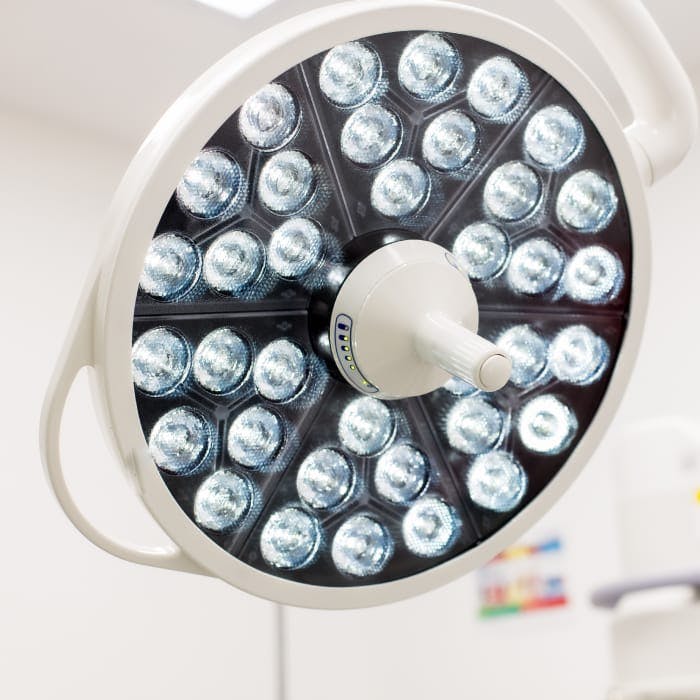
medical light

What to Expect From Total Disc Replacement in West Orange

Before Your Procedure

Your preoperative consultation at our West Orange location is built around one central question: Is disc replacement genuinely the right procedure for this patient, or is it simply an available one? Our surgeons work through your symptom history, your imaging, your prior treatment record, and the specific characteristics of your anatomy before arriving at that answer. If disc replacement is the right fit, you will understand exactly why. If fusion or another approach is more appropriate, you will hear that too, with a clear explanation of the reasoning.

The Day of Your Procedure

Total disc replacement is performed under general anesthesia and typically takes two to three hours. Lumbar disc replacement uses an anterior abdominal approach, while cervical disc replacement uses a small incision at the front of the neck. Most patients are discharged within one to two days of surgery.

Recovery After Your Procedure

Patients recovering from disc replacement frequently comment on how different it feels compared to what they expected from spine surgery. Without a fusion site to protect, the early weeks look quite different; no bone graft maturing, no extended movement restrictions, no prolonged bracing. The spine is free to move as soon as healing allows, which for most patients means a return to light activity within a few weeks and a steady progression back to full function over one to three months. Our West Orange team provides a structured rehabilitation plan and monitors your progress closely throughout.

Doctor media

Why Choose Gerling Spine Care and Research Institute?

What distinguishes a practice in total disc replacement is not access to the procedure, but the discipline to apply it only where it will actually succeed. That discipline requires clinical experience, honest patient communication, and the willingness to recommend fusion when the anatomy calls for it, rather than defaulting to the procedure the patient came in hoping for. At Gerling Spine Care and Research Institute, those qualities define how our West Orange team approaches every disc replacement evaluation, and our published outcomes are a direct reflection of that standard.

Total Disc Replacement Frequently Asked Questions

How long do artificial disc implants last?

The implants used in total disc replacement are designed and stress-tested for long-term mechanical performance, and the available follow-up data—which now extends to ten years or more in many published studies—shows low revision rates and durable outcomes. What remains genuinely unknown is how these implants perform at the 30 or 40-year mark, simply because the procedure has not been in widespread use that long. Your surgeon will walk you through the current evidence honestly and set expectations that reflect what is actually known rather than what sounds reassuring.

Can total disc replacement be performed at more than one level?

Two-level disc replacement is performed in appropriate candidates and is well supported in the clinical literature. Replacement spanning three or more adjacent levels is generally not recommended. Your surgeon will assess your imaging and anatomy carefully to determine what is both technically appropriate and clinically warranted for your specific situation.

What happens if total disc replacement does not provide the relief I expected?

Incomplete or absent relief after total disc replacement is uncommon in appropriately selected patients, but when it does occur, revision options are available. Conversion to fusion at the treated level is the most common revision pathway and is technically feasible in most cases. Our West Orange team structures post-operative follow-up specifically to identify incomplete responses early, before they become harder to address, and will develop a clear next-step plan if the initial outcome falls short.

Is recovery different for cervical versus lumbar disc replacement?

Yes, meaningfully so. Cervical disc replacement typically involves a shorter recovery, with many patients returning to desk work within one to two weeks and resuming most normal activities shortly after. Lumbar disc replacement involves an anterior abdominal approach that requires more recovery time, with most patients returning to light activity within a few weeks and full activity over the following one to two months. Your surgeon will outline a recovery plan specific to the procedure and your individual circumstances.

Will I have long-term activity restrictions after total disc replacement?

The goal of disc replacement is to return patients to unrestricted function, and for most, that is exactly what happens once healing is complete. Because the implant moves with the spine rather than immobilizing it, the long-term activity picture is considerably more open than it is after fusion. There are no permanent restrictions built around protecting a fusion site. Activities involving very high impact or extreme loading are worth discussing with your surgeon on an individual basis. Still, the implant is specifically designed to support normal and active use of the spine over the long term.

We're here to help you move forward.

Relief starts with quality orthopedic care. Contact us today to take the next step toward a more active, pain-free life.

Schedule Appointment (opens in a new tab)
Contact us media
Accessibility: If you are vision-impaired or have some other impairment covered by the Americans with Disabilities Act or a similar law, and you wish to discuss potential accommodations related to using this website, please contact our Accessibility Manager at 201-201-7246.
Contact Us