Radiating Pain Follows a Specific Nerve—and That Makes It Treatable

When pain travels from the spine into an arm or leg, it is not a vague complaint; it is a neurological signal with a specific origin. The distribution of symptoms along a predictable anatomical path tells a trained clinician which nerve root is involved and where the problem likely sits. Radiculopathy is among the most common and most successfully treated conditions in spine care. Most patients recover without surgery, and those who do require intervention do significantly better when the structural source has been precisely identified before any treatment decision is made. At Gerling Spine Care and Research Institute, patients at our West Orange location receive a systematic diagnostic evaluation and access to the complete range of treatment options, managed by a team with genuine depth in both conservative and surgical care. Contact our West Orange office today to schedule a consultation and take the first step toward lasting relief.

Medical professional examining a patient's lower back

What Is Radiculopathy?

Radiculopathy occurs when a spinal nerve root is compressed, stretched, or chemically irritated at the point where it exits the spinal canal. The distinctive feature of radiculopathy is that the symptoms do not stay at the spine; they travel outward along the nerve's anatomical distribution, producing pain, numbness, tingling, or weakness somewhere in the arm or leg that the nerve supplies. This traveling quality is both what makes radiculopathy recognizable and what makes it diagnostically useful: the pattern of symptoms helps identify which nerve root is involved before a single image is taken.

Types of Radiculopathy

Cervical Radiculopathy

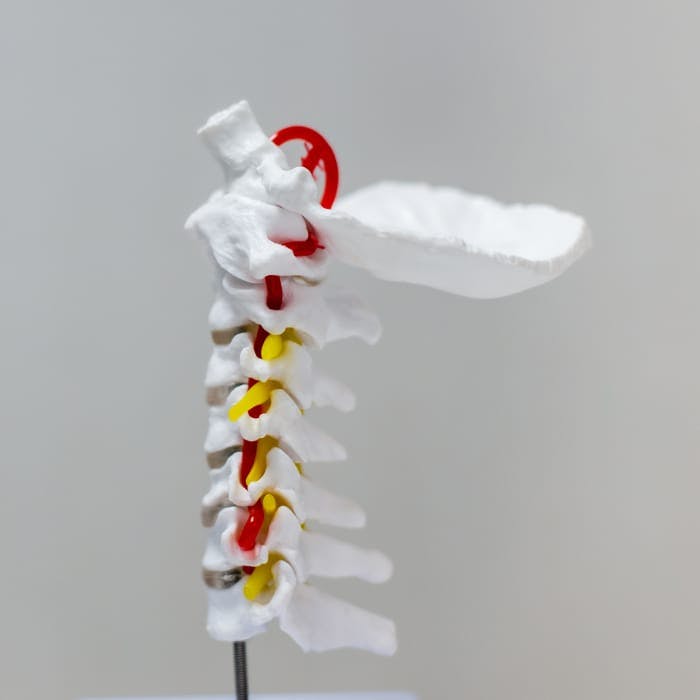
Cervical nerve root compression produces symptoms that leave the neck and travel outward, into the shoulder, down the arm, and sometimes into specific fingers, depending on which cervical level is affected. The character of those symptoms, whether predominantly pain, numbness, or weakness, and precisely where they land in the upper extremity, provides the clinical team with information that guides both the diagnostic workup and the treatment approach.

Lumbar Radiculopathy

Lumbar nerve root compression sends symptoms downward through the buttock and into the leg, with the specific path depending on which root is involved. This is the presentation many patients know as sciatica when the sciatic nerve roots are affected, though lumbar radiculopathy encompasses a broader range of presentations than that single term suggests. Disc herniation is the most frequent cause in younger patients; stenosis becomes increasingly common as the degenerative process advances with age.

Thoracic Radiculopathy

Thoracic radiculopathy stands apart from its cervical and lumbar counterparts in both its rarity and its symptom pattern. Rather than producing pain down an arm or leg, compression of a thoracic nerve root generates symptoms that circle the trunk at the level of the affected vertebra—a band of pain, tingling, or hypersensitivity that wraps around the chest or abdomen. Because this presentation does not fit the patterns clinicians are most accustomed to seeing, it is frequently attributed to musculoskeletal, cardiac, or gastrointestinal causes before the spine is properly evaluated.

Background media

Symptoms of Radiculopathy

Presentation varies based on which nerve root is affected and how severely it is compressed. Common features include:

  • Radiating pain traveling from the spine into the arm or leg
  • Numbness or tingling in the arm, hand, leg, or foot
  • Muscle weakness in the affected limb
  • Sharp, burning, or electric-quality pain that worsens with specific movements or positions
  • Reduced reflexes in the affected extremity

Symptoms affecting both limbs simultaneously, or any change in bladder or bowel function, may indicate a more serious condition and warrant prompt evaluation.

spine

We’re here to help you move forward.

Contact Us

What Causes Radiculopathy?

The underlying mechanism is always some form of structural compromise to the space a nerve root needs. The most common structural sources include:

  • A herniated or bulging disc pressing directly on a nerve root
  • Spinal stenosis, causing a narrowing of the canal or foraminal openings
  • Bone spurs from degenerative facet joint disease
  • Spondylolisthesis compressing the exiting nerve root
  • Degenerative disc disease with associated foraminal narrowing
  • Less commonly, spinal tumors, cysts, or infections

How Radiculopathy Is Treated at Gerling Spine Care and Research Institute

Conservative Treatment

Conservative management is the right starting point for most radiculopathy patients and succeeds for the majority when applied consistently. A structured physical therapy program tailored to the specific nerve root involved forms the foundation, addressing the mechanical contributors to nerve irritation and building the support structures that reduce ongoing stress on the affected level. Anti-inflammatory medications reduce the acute inflammatory response around the irritated root, and activity modification limits movements and positions that provoke symptoms while recovery progresses.

Interventional Pain Management

When conservative management has been genuinely pursued without sufficient benefit, injections offer the next step. Delivering anti-inflammatory medication directly to the site of nerve root irritation produces more targeted relief than systemic medication can achieve. At our West Orange location, options include epidural steroid injections for nerve root inflammation, transforaminal selective nerve root blocks that combine diagnostic confirmation with precise therapeutic delivery, and medial branch block injections when facet joint involvement appears to be contributing to the radiculopathy.

Minimally Invasive and Surgical Treatment

Surgery is considered when conservative and interventional treatment has not produced adequate improvement after a reasonable trial, or when neurological deficits are significant or progressing. The specific approach depends on the location and structural cause of the compression, and may include:

  • ACDF or artificial cervical disc replacement for cervical radiculopathy
  • Minimally invasive lumbar discectomy or endoscopic discectomy for lumbar nerve root compression from disc herniation
  • Laminectomy or foraminotomy for nerve root compression from stenosis
  • Lumbar fusion for cases involving instability or spondylolisthesis alongside the nerve compression

Are You a Candidate for Radiculopathy Treatment in West Orange?

Any patient with radiating arm or leg symptoms, sensory changes, or limb weakness that has persisted beyond a few weeks and is affecting their ability to function normally is a reasonable candidate for evaluation at our West Orange location. Earlier evaluation produces better outcomes, not because earlier intervention is always necessary, but because an accurate diagnosis at an earlier stage allows the right treatment to begin before neurological changes have had time to progress. Whether surgery is ultimately appropriate is a separate determination made individually for each patient, based on the clinical findings, the imaging, the treatment history, and the trajectory of any neurological deficits.

Doctor media

Why Choose Gerling Spine Care and Research Institute?

The clinical reality of radiculopathy is that it looks simple from a distance and complicated up close. Identifying the right nerve root, distinguishing it from overlapping pathology, and selecting the treatment most likely to produce lasting relief requires a team that has worked through these cases in their full complexity over many years. At Gerling Spine Care and Research Institute, our West Orange team brings that accumulated clinical experience to every radiculopathy evaluation, supported by a research program that keeps our approach current and a full range of treatment options that ensure every patient has access to whatever their condition actually requires.

Radiculopathy Treatment Frequently Asked Questions

What is the difference between radiculopathy and a pinched nerve?

Pinched nerve is how most people describe the experience of radiculopathy in everyday terms: the sensation of something being compressed and sending pain or numbness down an arm or leg. Radiculopathy is the clinical terminology for that same phenomenon, specifically describing the symptom complex that results when a spinal nerve root is compressed or irritated. The two terms are not competing diagnoses — they are simply different registers of language describing the same underlying condition.

Will radiculopathy get better without treatment?

For disc herniation-related radiculopathy, spontaneous improvement is genuinely common. The body can gradually reabsorb the herniated disc material that is compressing the nerve root over weeks to months, and as that process unfolds, the associated nerve inflammation typically settles. This natural history is what justifies a conservative trial before more invasive options are considered. Structural causes that do not resorb, such as stenosis or bony foraminal narrowing, are less likely to improve without targeted treatment. And regardless of cause, any radiculopathy that is progressing neurologically, worsening rapidly, or accompanied by bilateral leg symptoms or bowel and bladder changes should be evaluated promptly rather than observed.

How long does radiculopathy recovery typically take?

Recovery timelines vary enough across the different causes and severity levels of radiculopathy that general estimates have limited practical value. Disc herniation cases managed conservatively tend to show meaningful improvement within six to twelve weeks in most patients, with the pace of recovery tied to how quickly the inflammatory response around the nerve root settles. Stenosis-driven radiculopathy follows a slower and less predictable course and more frequently requires interventional or surgical management. At the surgical end of the spectrum, minimally invasive discectomy is notable for the speed of its symptom relief; the radiating pain that has dominated a patient's life for weeks or months often begins to lift within days of the procedure.

Is sciatica the same thing as lumbar radiculopathy?

Sciatica is one specific presentation within the broader category of lumbar radiculopathy. It describes the symptom pattern that develops when the nerve roots forming the sciatic nerve are compressed, producing pain that travels through the buttock and down the back of the leg. Other lumbar nerve roots can be compressed and produce radiating leg symptoms that follow different anatomical paths. Those presentations are lumbar radiculopathy, but not sciatica in the traditional sense. The distinction matters clinically because the specific root involved shapes both the diagnosis and the treatment approach.

When does radiating pain need to be evaluated by a specialist?

Symptoms that have persisted for more than two to three weeks without clear improvement warrant a formal evaluation, not because surgery is imminent, but because an accurate diagnosis allows treatment to be appropriately targeted. More urgent evaluation is warranted when limb weakness is progressing, when symptoms are rapidly worsening, or when bilateral leg symptoms, groin or saddle area numbness, and bladder or bowel changes occur together. That combination can indicate cauda equina syndrome, which is a surgical emergency requiring immediate attention rather than a scheduled appointment.

We're here to help you move forward.

Relief starts with quality orthopedic care. Contact us today to take the next step toward a more active, pain-free life.

Schedule Appointment (opens in a new tab)
Contact us media
Accessibility: If you are vision-impaired or have some other impairment covered by the Americans with Disabilities Act or a similar law, and you wish to discuss potential accommodations related to using this website, please contact our Accessibility Manager at 201-201-7246.
Contact Us