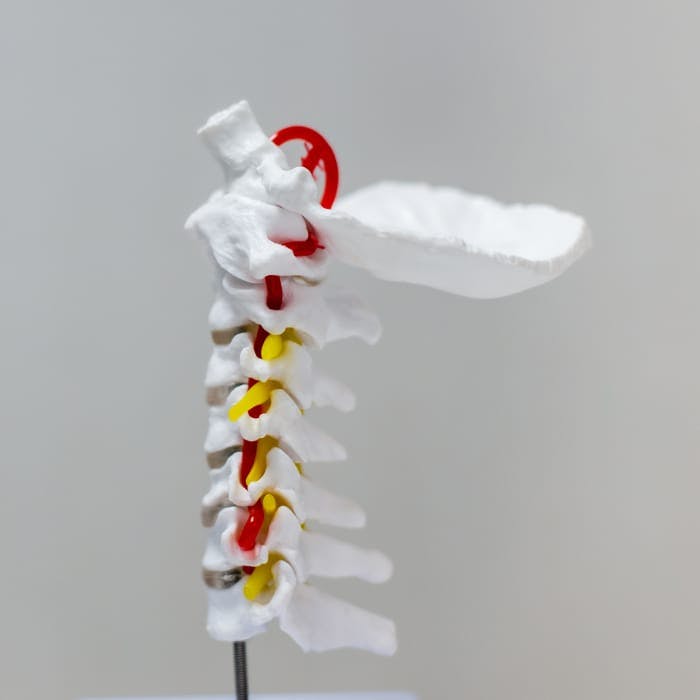
A Damaged Cervical Disc Can Affect Far More Than Your Neck

A failing cervical disc rarely confines its damage to the neck. The nerve compression it produces can send pain, numbness, and weakness into the shoulder, arm, and hand, interfering with work, sleep, and the most basic daily tasks. ACDF is the most widely performed cervical spine procedure in the country and carries one of the strongest long-term track records in all of spine surgery.

At Gerling Spine Care and Research Institute, patients at our Bayonne location receive this procedure from a surgical team that has spent decades refining minimally invasive cervical technique, studying its outcomes, and teaching those techniques to the next generation of spine surgeons. Contact our Bayonne office today to schedule a consultation and find out whether ACDF is the right solution for your condition.

What Is ACDF Surgery?

ACDF combines two surgical steps performed through a single small incision at the front of the neck. The anterior approach gives the surgeon direct access to the damaged disc without disturbing the spinal cord or the muscles running along the back of the neck, an important advantage over posterior approaches for most cervical disc conditions.

The Discectomy

Working through the disc space, the surgeon removes the damaged or herniated disc material that has been compressing the spinal cord or a nearby nerve root. Bone spurs and any other compressive material at that level are cleared at the same time, fully decompressing the affected neural structures.

The Fusion

With the disc space cleared and properly prepared, a bone graft or implant is seated between the vertebrae to restore the correct disc height and spinal alignment. A low-profile plate and screws secure the construct while the bone above and below gradually grows across the graft, forming a solid, permanent union at that level. The procedure is typically completed as an outpatient, with most patients heading home the same day or within 24 hours.

Medical professional and patient walking in a hallway

Conditions Treated With ACDF

ACDF is recommended when conservative treatments—physical therapy, medications, and injections—have not provided adequate relief, and when imaging confirms a structural problem that clearly corresponds to the patient's clinical symptoms. It is used to treat:

  • Cervical disc herniation causing arm pain, numbness, or weakness
  • Cervical degenerative disc disease
  • Cervical radiculopathy (pinched nerve)
  • Cervical spinal stenosis with nerve compression
  • Cervical myelopathy (spinal cord compression)
  • Bone spurs, causing nerve root or spinal cord compression

The Gerling Approach to ACDF

At Gerling Spine Care and Research Institute, ACDF is not a commodity procedure. Every element of how we plan and perform it reflects decades of focused surgical practice, active engagement with the peer-reviewed literature, and a genuine commitment to minimizing the physical burden on the patient while maximizing the durability of the result.

Minimally Invasive Precision

Minimally invasive cervical technique is not an add-on at our practice; it is the standard. Our Bayonne surgeons have spent their careers developing and refining approaches that protect surrounding soft tissue, reduce intraoperative blood loss, keep anesthesia time as short as possible, and leave patients with smaller incisions and significantly less post-operative soreness than traditional open surgery produces.

Operating Room Efficiency

Efficiency in the operating room is something our team has built a measurable record on, including some of the shortest hospital stays in the NYU system. For patients traveling to our Bayonne location, that record translates directly into less time in a hospital bed and a faster transition to recovery at home.

Research-Driven Care

With more than 300 peer-reviewed publications across the institute and active leadership in NASS, CSRS, and LSRS, the care our Bayonne patients receive reflects the current frontiers of cervical spine surgery, built on evidence, not convention.

Background media

Are You a Candidate for ACDF in Staten Island?

ACDF is generally appropriate for patients with one or more affected cervical disc levels, neurological symptoms that have not responded to a meaningful trial of conservative care, and imaging findings that clearly correlate with their clinical presentation. The number of levels involved, overall health, and prior surgical history all factor into candidacy.

Patients whose symptoms are mild and continuing to improve on their own, or those who have not yet completed an appropriate course of conservative treatment, are typically not surgical candidates at this stage. Our Bayonne team will give you a thorough, honest evaluation and tell you clearly where you stand, without pressure in either direction.

spine

We’re here to help you move forward.

Contact Us

What to Expect From Your ACDF Procedure in Bayonne

From your initial consultation through your final follow-up, our Bayonne team is focused on keeping you informed, supported, and on track toward the best possible outcome.

Before Your ACDF Procedure

Your consultation will include a detailed review of your symptoms, imaging, and treatment history. Our surgeons take the time to explain the procedure fully, walk through all available alternatives, including cervical disc replacement, and ensure every question is answered before any decision is made.

The Day of Your Surgery

ACDF is performed under general anesthesia and typically takes one to two hours. The small incision at the front of the neck allows the procedure to be completed with minimal disruption to surrounding tissue. Most patients are discharged the same day.

Recovering After Your Procedure

Arm pain and neurological symptoms often begin improving within the first few weeks after surgery as the decompressed nerve root heals. Complete recovery, including solid fusion visible on imaging, generally takes three to six months, depending on the number of levels treated and individual healing factors. A modest reduction in cervical flexibility at the fused level is a normal part of the outcome. Our Bayonne team provides a detailed post-operative plan and follows your progress closely from discharge through final clearance.

Our team provides detailed post-operative guidance and remains actively involved throughout the recovery process.

Doctor media

Why Choose Gerling Spine Care and Research Institute?

ACDF is a procedure where surgical experience, technical refinement, and genuine research depth all converge to produce better outcomes. Our lead surgeon has dedicated his career to advancing minimally invasive cervical spine surgery through peer-reviewed research, national society leadership, and decades of focused clinical practice. Patients at our Bayonne location benefit from that depth of expertise at every step, from the preoperative workup through the final follow-up visit.

Anterior Cervical Discectomy and Fusion (ACDF) Frequently Asked Questions

Is ACDF considered a major surgery?

It is a real surgical procedure performed under general anesthesia, but it is also among the most routinely performed and thoroughly studied spine operations in existence. The minimally invasive approach our team uses reduces the physical impact considerably relative to traditional open surgery, with smaller incisions, less muscle disruption, and a recovery timeline measured in weeks for most patients rather than months.

Will I lose neck mobility after ACDF?

Fusion eliminates motion at the treated level, which can produce a modest reduction in overall neck flexibility. For most patients, the relief from chronic pain and neurological symptoms makes that trade-off straightforward. Patients with significant concerns about mobility loss may want to discuss Artificial Cervical Disc Replacement as a motion-preserving alternative during their consultation.

How do I know whether I am a candidate for ACDF?

The factors that determine candidacy include how many cervical levels are affected, the severity and duration of nerve or cord compression, your overall health, and what prior treatment has already been attempted. Imaging that closely matches your clinical presentation is essential. Our Bayonne team will review all of this in detail during your consultation and provide an honest assessment of whether surgery is appropriate for your situation.

What are the risks of ACDF?

As with any surgical procedure, risks include infection, bleeding, and temporary swallowing difficulty in the days following surgery. Injury to the vocal cord nerves or spinal cord is rare but possible and will be discussed in full. Our minimally invasive approach and focus on operating room efficiency are specifically intended to reduce procedural risk, and you will receive a complete explanation of the potential risks and benefits during your consultation.

When can I return to work after ACDF?

Patients in desk-based roles typically return within a few weeks of surgery. Those with physically demanding jobs may require several months before returning to full duty. Your surgeon will provide individualized guidance based on your procedure, recovery progress, and the physical demands of your work.

We're here to help you move forward.

Relief starts with quality orthopedic care. Contact us today to take the next step toward a more active, pain-free life.

Schedule Appointment (opens in a new tab)
Contact us media
Accessibility: If you are vision-impaired or have some other impairment covered by the Americans with Disabilities Act or a similar law, and you wish to discuss potential accommodations related to using this website, please contact our Accessibility Manager at 201-201-7246.
Contact Us