When the Cervical Spine Needs Both Decompression and Stability, One Approach Handles Both

There is a category of cervical spine conditions where relieving nerve or cord compression, while necessary, is not sufficient on its own. When structural instability, deformity, trauma, or multilevel pathology is part of the picture, the spine also needs to be stabilized, and doing that well requires both surgical depth and careful preoperative planning. Posterior cervical fusion addresses both dimensions through a single approach from the back of the neck, using precision instrumentation to restore proper spinal alignment and maintain it permanently.

At Gerling Spine Care and Research Institute, patients at our Bayonne location facing these more complex clinical scenarios have access to a team with the technical range and research foundation to manage them at the highest level. Contact our Bayonne office today to schedule a consultation and find out whether posterior cervical fusion is the right solution for your condition.

What Is Posterior Cervical Fusion?

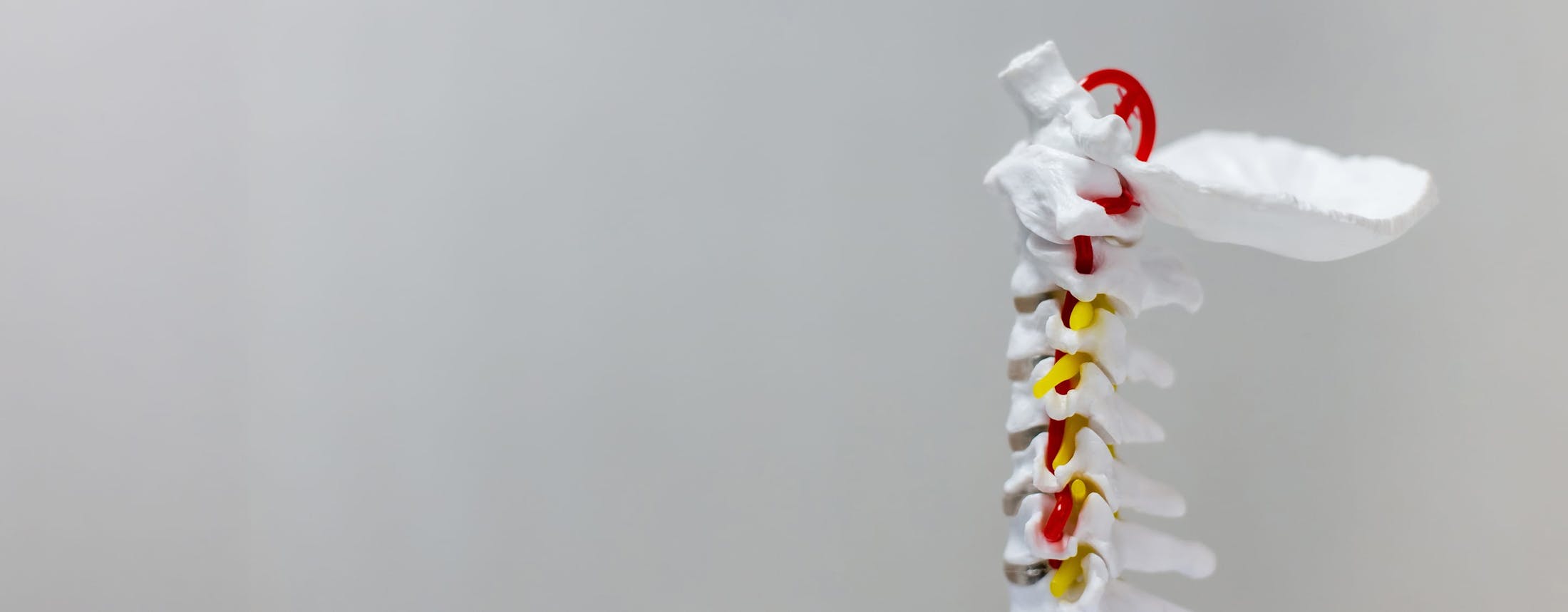
The posterior approach to cervical fusion reaches the spine through the back of the neck, allowing the surgeon to place screws directly into the vertebrae on both sides and connect them with stabilizing rods. Bone graft material is packed alongside the instrumented levels, where it gradually stimulates new bone growth that bridges the vertebrae into a single, permanent unit. The hardware provides immediate stability from the moment surgery is complete, while the biological fusion process builds the long-term structural foundation underneath it.

When a Posterior Approach Is the Right Choice

Choosing between an anterior and posterior approach requires honest evaluation of where the problem actually is and what it involves. Posterior fusion is the more appropriate choice when the source of compression or instability sits toward the back of the spinal canal, when the number of levels involved makes an anterior approach insufficient, when spinal deformity needs to be corrected from behind, or when a prior anterior surgery is already in place. The spine needs additional posterior support, or when the underlying problem involves trauma, tumor, or infection affecting the posterior cervical structures. Getting that selection right, rather than defaulting to a familiar technique, is a meaningful part of what good surgical planning looks like.

Understanding those indications clearly and applying them honestly is what separates a well-planned posterior cervical fusion from one that could have been handled a different way.

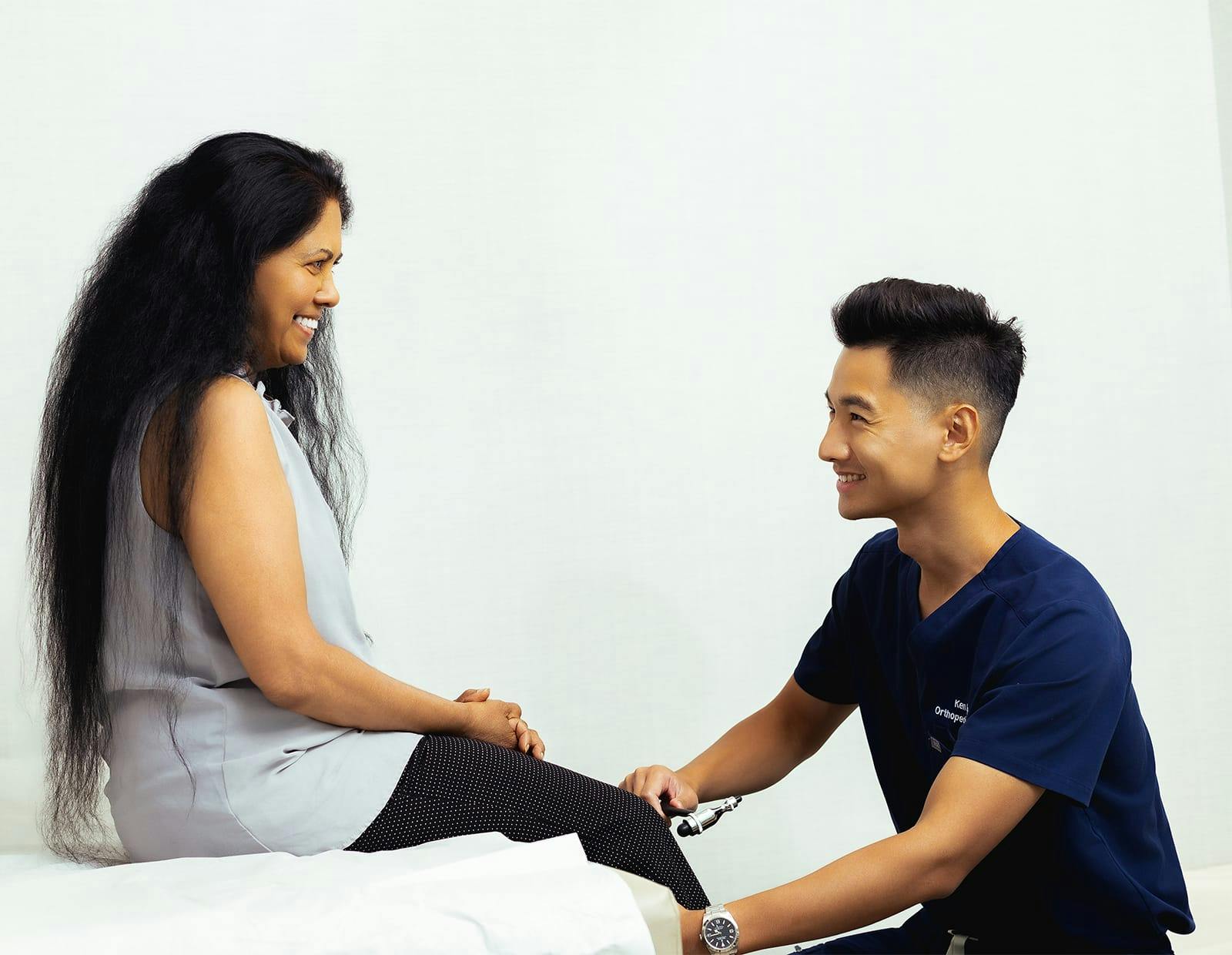
Healthcare provider in navy scrubs using a reflex hammer to assess a patient's knee response during a physical exam

Conditions Treated With Posterior Cervical Fusion

Posterior cervical fusion is used to address a range of complex cervical spine conditions, including:

  • Multilevel cervical spondylotic myelopathy requiring simultaneous decompression and stabilization
  • Cervical instability from degenerative disease, trauma, or congenital factors
  • Cervical kyphotic deformity requiring realignment and fusion
  • Cervical fractures or dislocations
  • Revision surgery following failed prior cervical procedures
  • Adjacent segment degeneration following previous anterior fusion
  • Spinal tumors or infections compromising cervical stability
  • Rheumatoid arthritis with cervical involvement

We’re here to help you move forward.

Contact Us

Are You a Candidate for Posterior Cervical Fusion in Bayonne?

The patients best suited for posterior cervical fusion tend to share a few common features: their condition spans multiple cervical levels, conservative treatment has not produced adequate relief, and the anatomy or nature of the pathology makes an anterior approach alone insufficient.

Beyond those broad criteria, candidacy hinges on factors specific to each patient: spinal alignment, bone density, prior surgical history, and overall health all influence both the decision to operate and the specific technique used. Some patients ultimately need a combined anterior and posterior approach, and our Bayonne team has the experience to plan and carry out those more complex constructs when the situation calls for it.

What to Expect From Posterior Cervical Fusion in Bayonne

Before Your Procedure

The preoperative process at our Bayonne location is thorough by design. Your surgeon will spend time with your imaging, not just reviewing it but walking you through what it shows and why it points toward posterior fusion rather than an alternative approach. Every available option is presented honestly, including the possibility of a combined procedure, and you will leave the consultation with a clear understanding of what the surgery involves, what recovery looks like, and what outcomes are realistic for your specific clinical situation.

The Day of Your Procedure

The procedure is performed under general anesthesia, with operating time varying based on the number of levels being fused and whether decompression is performed simultaneously. Most patients remain in the hospital for one to two days following surgery. Our team's focus on operating room precision and efficiency is specifically designed to minimize time under anesthesia and set recovery off on the right foundation.

Recovery After Your Procedure

Neurological symptoms, like arm weakness, hand clumsiness, and balance problems, often begin improving within the first several weeks as the spinal cord and nerve roots recover from the compression that was relieved. Return to light daily activities typically follows within a few weeks of surgery, while more physically demanding roles may require several months. Physical therapy is a central component of recovery, rebuilding cervical strength and supporting long-term function as the fusion matures. Solid fusion confirmed on imaging generally takes several months to a year or more, depending on the number of levels involved and individual healing factors.

Background media
Doctor media

Why Choose Gerling Spine Care and Research Institute?

What posterior cervical fusion requires most is surgical judgment; the kind that comes from having performed and studied these procedures extensively enough to know where the common pitfalls are and how to avoid them. Screw placement, alignment management across multiple levels, decompression planning, and anticipating how the construct will behave biomechanically over the years all demand that depth of experience. Our Bayonne team brings it, supported by more than 300 peer-reviewed publications and leadership in CSRS, NASS, and LSRS, not as credentials to display, but as evidence of a practice genuinely engaged with advancing the standard of care.

Posterior Cervical Fusion Frequently Asked Questions

How is posterior cervical fusion different from ACDF?

The primary difference is the surgical approach and the conditions each procedure is designed to treat. ACDF is performed through the front of the neck and is typically used for one- or two-level disc problems with anterior compression. Posterior cervical fusion is performed through the back of the neck and is better suited for multilevel disease, posterior instability, spinal deformity, or cases where an anterior procedure alone would not provide adequate stabilization. In some situations, both approaches are combined to achieve the best outcome.

Will posterior cervical fusion affect how much I can move my neck?

Yes. Fusion permanently eliminates motion at the treated levels, and the more levels fused, the greater the overall reduction in neck flexibility. For most patients, the improvement in pain, neurological function, and spinal stability outweighs the loss of motion. Your surgeon will discuss the expected impact on mobility based on the number of levels being fused.

How long before the fusion is fully solid?

Bone fusion develops gradually over several months. Most patients experience meaningful symptom improvement well before imaging confirms a solid fusion, which may take anywhere from several months to two years depending on the number of levels treated, bone quality, and individual healing factors. Follow-up imaging is used to monitor progress throughout recovery.

Can posterior cervical fusion be combined with other procedures?

Yes. Posterior cervical fusion is commonly performed alongside procedures such as laminectomy or foraminotomy to relieve pressure on the spinal cord or nerve roots. In more complex cases, it may also be combined with an anterior cervical procedure to address both decompression and stabilization. Your surgeon will recommend the most appropriate combination based on your anatomy and diagnosis.

What are the risks of posterior cervical fusion?

As with any spine surgery, potential risks include infection, bleeding, nerve injury, and hardware-related complications. The likelihood of these risks depends on factors such as the complexity of the procedure, your overall health, and the extent of surgery. Careful preoperative planning, meticulous surgical technique, and comprehensive follow-up care are all aimed at minimizing complications, and your surgeon will review the risks and benefits in detail during your consultation.

We're here to help you move forward.

Relief starts with quality orthopedic care. Contact us today to take the next step toward a more active, pain-free life.

Schedule Appointment (opens in a new tab)
Contact us media
Accessibility: If you are vision-impaired or have some other impairment covered by the Americans with Disabilities Act or a similar law, and you wish to discuss potential accommodations related to using this website, please contact our Accessibility Manager at 201-201-7246.
Contact Us