Your Blood Already Contains What Your Tissues Need to Heal

Platelet-rich plasma therapy starts with something the body is already doing. Your blood carries the growth factors your tissues depend on for repair. PRP simply concentrates them from a standard blood draw and puts them to work at the exact site of injury or degeneration, in a dose far greater than what circulates naturally.

For patients at our Bayonne location who want a non-surgical, biologically grounded option for spine or musculoskeletal pain, PRP injections at Gerling Spine Care and Research Institute offer a well-researched treatment delivered by a team that applies it with genuine clinical rigor. Contact our Bayonne office today to find out whether PRP Injections are the right next step for your condition.

What Are PRP Injections?

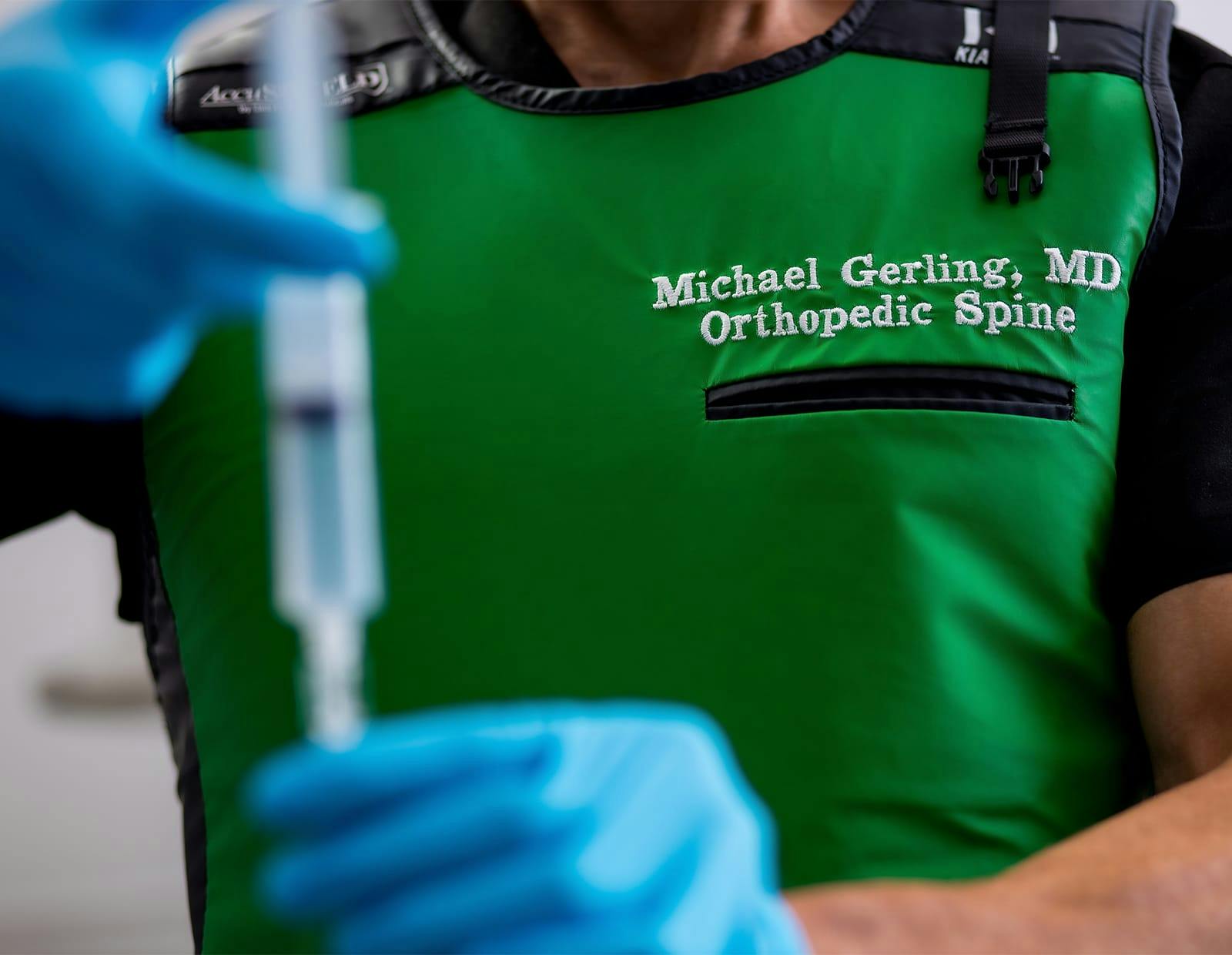
Platelet-rich plasma is created from the patient's own blood. A small sample is drawn, then spun in a centrifuge that separates the platelets from other blood components and concentrates the growth factors they contain. The resulting solution is injected under imaging guidance directly into the area of injury or degeneration, delivering a targeted biological stimulus to tissue that needs support.

How PRP Promotes Healing

Platelets are best known for their role in clotting, but that is only a small part of what they do. They are also a primary source of growth factors that drive cell regeneration, quiet local inflammation, encourage the formation of new tissue, and support the structural repair of cartilage, tendon, ligament, and disc tissue. When those factors are concentrated and delivered to a specific site, the biological conditions for healing improve substantially compared to what the body can sustain on its own in a chronically degenerated environment.

PRP Versus Corticosteroid Injections

Corticosteroids have a well-established role in managing pain, but their mechanism is purely suppressive; they quiet inflammation temporarily without contributing anything to the repair process, and repeated use carries real risks to tissue integrity over time. Platelet-rich plasma takes the opposite approach, working through the body's own biological pathways to support actual tissue repair rather than symptom suppression. For patients managing degenerative conditions over the long term, that difference in mechanism matters. The clinical evidence supporting PRP's durability over corticosteroids continues to accumulate across a growing range of musculoskeletal conditions.

We’re here to help you move forward.

Contact Us
prp platelet rich plasma injections

Conditions Treated With PRP Injections

PRP therapy addresses a wide range of musculoskeletal and spinal conditions, including:

  • Degenerative disc disease of the cervical or lumbar spine
  • Facet joint arthritis and degeneration
  • Sacroiliac joint pain and dysfunction
  • Osteoarthritis of the spine, hip, knee, or shoulder
  • Chronic tendinopathy and tendon injuries
  • Ligament sprains and partial tears
  • Muscle injuries and chronic soft tissue pain
  • Sports injuries involving joints, tendons, or cartilage

PRP is particularly valuable for patients who have not responded adequately to physical therapy or conventional injections and are looking to avoid or delay surgical intervention.


Are You a Candidate for PRP Injections in Bayonne?

PRP therapy is well-suited for adults with confirmed musculoskeletal or spinal pain caused by degenerative or injury-related conditions who are seeking a non-surgical regenerative option and have not achieved lasting relief from prior conservative care. PRP may not be appropriate for patients with active infection, bleeding disorders, certain blood conditions, or those currently taking blood-thinning medications. NSAIDs should be discontinued at least seven days before the procedure, as they can interfere with platelet activity and reduce the effectiveness of the treatment. Our Bayonne team will conduct a thorough evaluation and determine whether PRP alone or in combination with other regenerative therapies is the most appropriate approach for your condition.

Banner media

What to Expect From PRP Injections in Bayonne

PRP is a streamlined outpatient procedure typically completed within 30 to 45 minutes from blood draw to injection.

Before Your PRP Injection

Your consultation will cover your symptoms, imaging, and full treatment history. Beyond reviewing the procedure itself, our team will walk through what a realistic response looks like for your specific condition, including honest timelines for when improvement is likely to begin and what degree of benefit is reasonable to expect. Pre-procedure instructions, including NSAID discontinuation at least seven days before your appointment, will be provided and explained at this stage.

The Day of Your Procedure

A small blood draw from your arm provides the raw material. That sample is centrifuged to isolate and concentrate the platelets and growth factors, which are then injected under imaging guidance into the treatment site. No general anesthesia is involved. The procedure is brief and well-tolerated — most patients experience minimal discomfort during the injection itself, and any post-procedure soreness is generally manageable with rest and ice.

Recovery After Your Procedure

Avoiding NSAIDs for at least one to two weeks after the injection is important, as these medications can blunt the platelet activity that drives the healing response. A temporary uptick in soreness in the days following the procedure is not unusual and reflects the biological process PRP sets in motion. Meaningful improvement generally begins to emerge within four to eight weeks and continues to develop over the months that follow. Many patients find that a course of two to three injections spaced several weeks apart produces the best long-term results, and our team tracks your progress and adjusts accordingly.

Doctor media

Why Choose Gerling Spine Care and Research Institute?

The availability of PRP has outpaced the quality of the programs offering it. At Gerling Spine Care and Research Institute, regenerative treatments, including PRP, are held to the same evidence-based standard as every other therapy we provide. Our Bayonne patients benefit from a team that has the scientific depth to know when PRP is genuinely the right tool, the honesty to say when it is not, and the full surgical and interventional range to manage their condition at any level of complexity if that becomes necessary.

PRP Injections in Bayonne Frequently Asked Questions

How is PRP different from bone marrow aspirate therapy?

PRP and bone marrow aspirate are both autologous biologics, meaning both come from the patient's own body, but they work through different mechanisms and carry different levels of biological potency. PRP delivers a concentrated dose of platelets and the growth factors they release. Bone marrow aspirate goes further, adding mesenchymal stem cells to the mix, which gives it a stronger regenerative capacity for more advanced or extensive tissue damage. For some patients and conditions, one is clearly the better fit; for others, combining the two produces the most comprehensive regenerative effect.

How many PRP injections will I need?

Many conditions respond well to a series of two to three injections spaced several weeks apart, though some patients achieve meaningful relief from a single treatment. The appropriate number depends on the condition, its severity, and the individual's biological response. Our team will guide the process based on your progress and clinical picture.

Does insurance cover PRP therapy?

PRP injections are generally not covered by insurance and are considered a regenerative or investigational treatment. Our Bayonne team provides transparent information about costs during your consultation so you can make a fully informed decision before committing to treatment.

How long do the results of PRP last?

How long PRP relief lasts depends significantly on the condition being treated, its severity, and the individual's biological response. Patients with earlier-stage degeneration or isolated soft tissue injuries often experience relief lasting a year or more. For progressive degenerative conditions, the underlying biology continues to change over time, and periodic repeat treatments may be needed to maintain the benefit achieved. Our team will give you a realistic picture of what to expect based on your specific situation.

Can PRP be used alongside other treatments?

Yes, and it frequently is. Platelet-rich plasma pairs well with physical therapy, activity modification, and other regenerative biologics, including bone marrow aspirate and exosomes. In some cases, a combined regenerative approach produces a more robust result than any single therapy alone. Our Bayonne team looks at the full picture of each patient's condition and builds a plan around what is most likely to work, not a standard protocol.

We're here to help you move forward.

Relief starts with quality orthopedic care. Contact us today to take the next step toward a more active, pain-free life.

Schedule Appointment (opens in a new tab)
Contact us media
Accessibility: If you are vision-impaired or have some other impairment covered by the Americans with Disabilities Act or a similar law, and you wish to discuss potential accommodations related to using this website, please contact our Accessibility Manager at 201-201-7246.
Contact Us