The Cutting Edge of Regenerative Medicine

For years, PRP and bone marrow aspirate defined the ceiling of what regenerative spine care could offer. Exosome therapy reflects a more sophisticated understanding of how biological healing actually works; one that goes beyond delivering cells or growth factors and instead targets the molecular signals cells use to coordinate repair, regulate inflammation, and communicate with surrounding tissue.

For patients at our Bayonne location seeking the most advanced non-surgical regenerative option currently available, Gerling Spine Care and Research Institute offers exosome therapy within a program defined by scientific integrity and honest, individualized patient care. Contact our Bayonne office today to learn whether exosome therapy is the right fit for your condition.

What Is Exosome Therapy?

Exosomes are submicroscopic vesicles that the body's cells produce and release continuously as part of an intricate biological communication network. Rather than acting directly on tissue themselves, they serve as carriers, transporting proteins, lipids, and genetic material, including RNA, from cell to cell, transmitting the instructions that govern tissue repair, immune regulation, and inflammation management. The exosomes used in clinical treatment are derived from donor mesenchymal stem cells and manufactured under tightly controlled laboratory conditions. The therapy does not introduce living cells into the body. Instead, it delivers the molecular signals those cells would naturally produce—growth factors, cytokines, and regulatory RNA—giving the body's own cells the biological instructions they need to begin repairing damaged tissue.

How Exosomes Compare to PRP and Bone Marrow Aspirate

Where PRP and bone marrow aspirate work by concentrating healing agents sourced directly from the patient, exosomes are manufactured externally and work through an entirely different mechanism. Because they contain no living cells, they sidestep many of the risks associated with cell-based therapies. They can be produced with a level of biological consistency that autologous treatments cannot match. That consistency makes them a particularly reliable component of a structured regenerative program. For patients who have plateaued on PRP or conventional injections, exosomes represent a more precise intervention, one that targets cellular behavior at a molecular level rather than simply increasing the local concentration of growth factors.

Where Exosome Therapy Fits in Our Regenerative Program

At our practice, exosome therapy does not exist in isolation. It sits within a regenerative program that also encompasses platelet-rich plasma, bone marrow aspirate, and disk cell and scaffold treatment. Whether exosomes are used as a standalone therapy or layered with other biologics depends entirely on the individual patient's condition, the structures involved, and the degree of degeneration present. Our Bayonne team makes that determination through careful evaluation, not a preset menu of options.


We’re here to help you move forward.

Contact Us
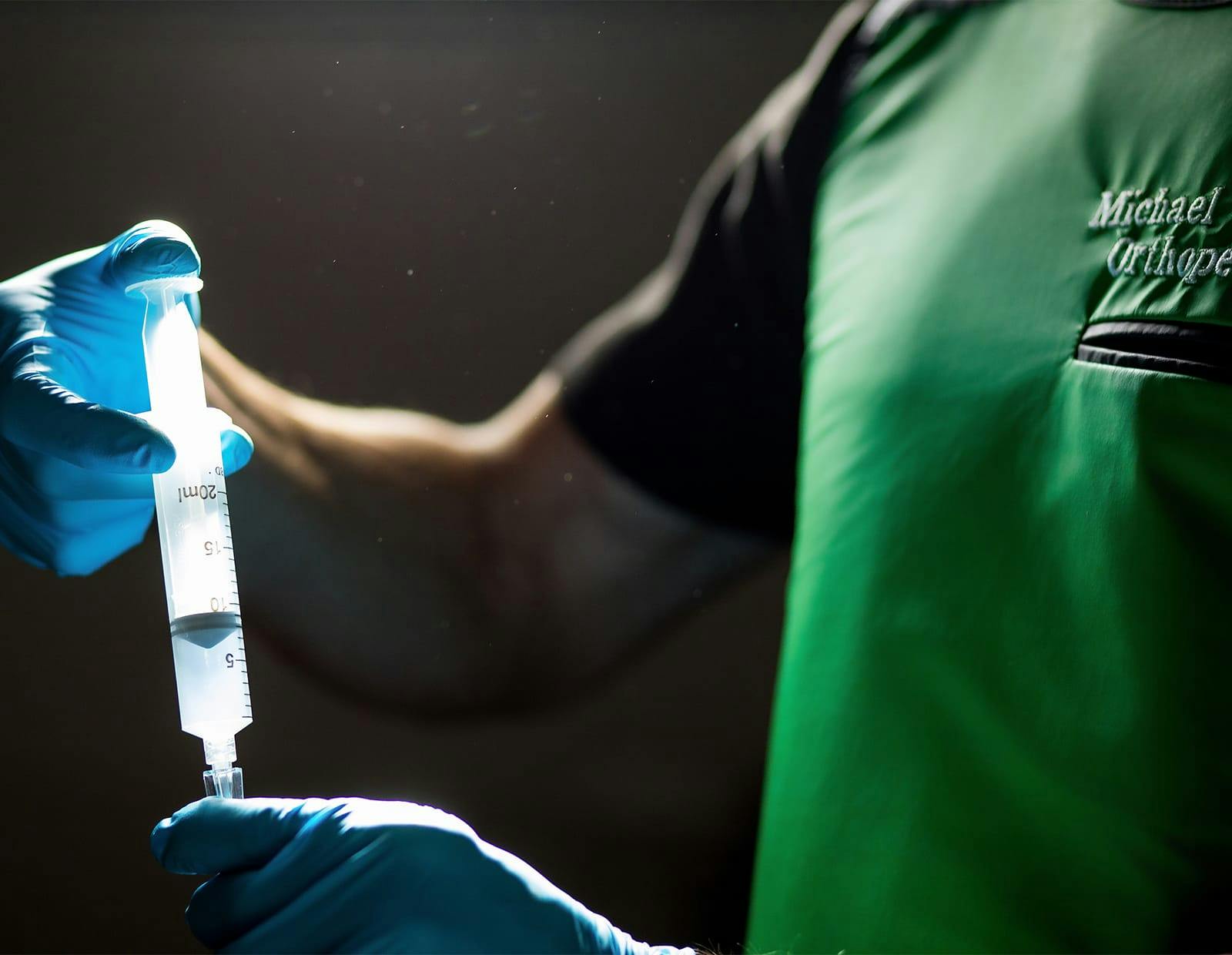
Medical professional wearing gloves preparing a syringe

Conditions Treated With Exosome Therapy

Exosome therapy is used to support tissue repair and reduce pain across a range of spinal and musculoskeletal conditions, including:

  • Degenerative disc disease of the cervical or lumbar spine
  • Herniated or bulging discs
  • Spinal arthritis and facet joint degeneration
  • Sacroiliac joint dysfunction
  • Osteoarthritis of the spine, hip, knee, or shoulder
  • Chronic tendinopathy and soft tissue injuries
  • Ligament injuries and cartilage damage
  • Sports-related musculoskeletal conditions

It is especially relevant for patients who have not found lasting relief through PRP or conventional injection therapies, or those who want access to the most advanced non-surgical regenerative option currently in clinical use.

Are You a Candidate for Exosome Therapy in Bayonne?

Adults with confirmed spinal or musculoskeletal conditions who have worked through conventional treatment options without achieving satisfactory relief are the core candidates for exosome therapy at our Bayonne location. This includes patients who have tried physical therapy, standard injections, and other biologics without lasting benefit, and who are committed to a non-surgical approach.

Patients with active infections, active malignancy, certain autoimmune conditions, or those on immunosuppressive therapy are generally not appropriate candidates. Given how rapidly this field is evolving, our team places particular weight on thorough patient selection and setting expectations that are grounded in the actual current evidence, not the most optimistic interpretation of it.

Banner media

What to Expect From Exosome Therapy in Bayonne

Exosome therapy is a minimally invasive outpatient procedure with minimal downtime and a simple recovery process.

Before Your Procedure

Your pre-procedure consultation will be thorough. We will review your imaging, your symptom history, and everything you have already tried, and use that information to build a clear picture of whether exosome therapy is genuinely the right next step. You will leave that appointment with a realistic understanding of what the treatment involves, what timeline to expect, and what degree of improvement is reasonable to anticipate for your specific condition. Medication instructions, including any adjustments needed in advance of the procedure, will be provided at this stage.

The Day of Your Procedure

The prepared exosome solution is injected into the target area under imaging guidance. No general anesthesia is required, and the appointment is typically completed in under an hour. Unlike BMA therapy, there is no harvest step involved, which makes the overall experience straightforward and well-tolerated by most patients.

Recovery After Your Procedure

Recovery is straightforward for most patients. Light activity is generally fine the same day, and any injection site soreness that develops typically resolves within a few days. Because exosome therapy works by delivering biological instructions rather than pharmaceutical agents, the response unfolds on a biological timeline. Patients should expect gradual improvement that builds over weeks and months rather than immediate relief. Our team monitors your progress at each stage and will raise the option of additional or complementary treatments if the clinical picture suggests they would add meaningful benefit.

Doctor media

Why Choose Gerling Spine Care and Research Institute?

The clinical bar for offering exosome therapy responsibly is higher than it is for more established treatments, precisely because the evidence base is still maturing. At Gerling Spine Care and Research Institute, that is exactly why we take it seriously. Our team follows the science, applies the therapy only where clinical judgment supports it, and is transparent about what remains uncertain. Patients at our Bayonne location can trust that a recommendation for exosome therapy reflects a genuine assessment of their situation, and that if it is not the right tool for them, we will say so.

Exosome Therapy in Bayonne Frequently Asked Questions

How are exosomes different from stem cells?

The core distinction is that stem cell therapy delivers living cells into the body, while exosome therapy delivers only the signals those cells produce. Exosomes are acellular, meaning they carry no living material, only the biological instructions encoded in their protein and RNA cargo. This simplifies storage and standardization considerably, reduces risks associated with introducing foreign cells, and allows many of the regenerative benefits of stem cell activity to be delivered in a more controlled and reproducible form.

Is exosome therapy FDA-approved?

Exosome therapy currently sits within an evolving regulatory environment. The FDA permits certain exosome treatments under specific guidelines, and reputable providers adhere strictly to FDA-compliant sourcing and processing standards. Our team will be fully transparent about the regulatory status of any protocol being considered for your care during your consultation.

How does exosome therapy compare to platelet-rich plasma?

Platelet-rich plasma works by concentrating the growth factors that platelets naturally release, which promotes healing at the site of injury. Exosomes operate through a more complex mechanism, carrying regulatory RNA and a broader array of proteins that influence how cells behave at a fundamental level, not just whether they have access to growth factors, but how they respond to and process biological signals. For some patients and conditions, that deeper mechanism translates to a more durable regenerative effect. The two can also be used together when a more comprehensive approach is warranted.

How many treatments will I need?

Most patients start with a single treatment and are monitored over several months before any decision about additional sessions is made. The right number of treatments depends on the condition being addressed, its severity, and the individual's biological response.

Does insurance cover exosome therapy?

Exosome therapy is not currently covered by insurance and is considered an investigational regenerative treatment. Our Bayonne team is fully transparent about costs during your consultation so you can make a well-informed decision before moving forward.

We're here to help you move forward.

Relief starts with quality orthopedic care. Contact us today to take the next step toward a more active, pain-free life.

Schedule Appointment (opens in a new tab)
Contact us media
Accessibility: If you are vision-impaired or have some other impairment covered by the Americans with Disabilities Act or a similar law, and you wish to discuss potential accommodations related to using this website, please contact our Accessibility Manager at 201-201-7246.
Contact Us