SI Joint Pain That Hasn't Responded to Conservative Care Deserves a More Definitive Solution

The sacroiliac joint is responsible for a significant share of chronic lower back and pelvic pain, and is missed as the source far more often than it should be. Patients frequently spend months pursuing treatment for lumbar disc disease or radiculopathy that never fully explains their symptoms, because the SI joint was never formally evaluated. When a diagnostic injection confirms the SI joint as the source and conservative measures have not delivered lasting relief, sacroiliac fusion addresses the problem at its structural root.

At Gerling Spine Care and Research Institute, patients at our Bayonne location receive this procedure within a practice that holds the diagnostic process to the same standard as the surgery itself. Contact our Bayonne office today to schedule a consultation and find out whether SI fusion is the right solution for your condition.

What Is Sacroiliac Fusion?

Sacroiliac fusion addresses the SI joint's structural instability directly rather than managing the inflammation it produces. Through a small incision, titanium implants are placed across the joint under real-time imaging guidance—fluoroscopy, navigation, or both—locking the joint surfaces together and eliminating the micro-motion between them that generates pain. Over the months that follow, bone grows across the implants, and the joint undergoes biological fusion, producing a permanent structural result rather than a temporary one.

The Role of the Sacroiliac Joint

The SI joint sits at the junction of the sacrum, the triangular bone at the base of the spine, and the iliac bone of the pelvis on each side. Its primary function is not movement but load transfer: channeling the mechanical forces of the upper body down through the pelvis and into the lower extremities through a dense network of surrounding ligaments. When that load-transfer function is disrupted by injury, degeneration, or inflammation, the joint becomes a source of persistent pain that is often severe and poorly localized, which is part of why it is so frequently attributed to something else.

The Minimally Invasive Advantage

Performing SI fusion through a minimally invasive approach changes the recovery experience significantly compared to open surgery. The incision is small, the surrounding soft tissue is largely undisturbed, and blood loss is minimal. The practical result is that patients spend far less time immobilized, most are on their feet the day after surgery, and the overall recovery burden is considerably lighter than patients typically anticipate when they first hear the word "fusion."

We’re here to help you move forward.

Contact Us
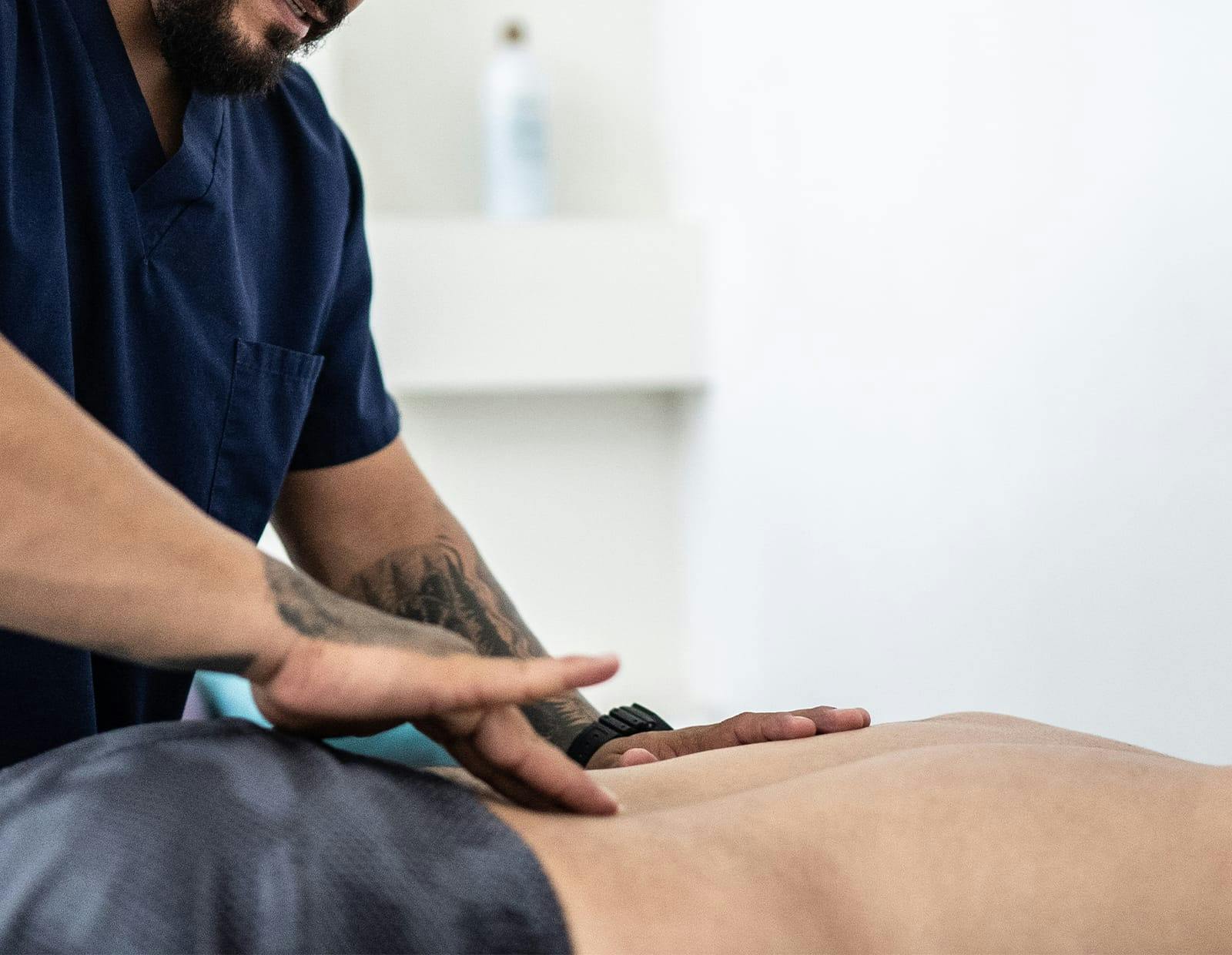
Medical professional applying pressure to someone's lower back

Conditions Treated With SI Fusion

SI fusion is appropriate when the sacroiliac joint has been confirmed as the primary pain generator and conservative management has not produced lasting relief. Conditions that may lead to surgical stabilization include:

  • Sacroiliac joint dysfunction or instability
  • Sacroiliitis from degenerative or inflammatory causes
  • Degenerative arthritis of the SI joint
  • Post-traumatic SI joint injury or disruption
  • Post-partum SI joint instability
  • Adjacent segment stress following lumbar fusion at L5-S1
  • Chronic SI joint pain confirmed through diagnostic injection that has not responded to therapeutic injections


Are You a Candidate for SI Fusion in Bayonne?

Candidacy for SI fusion begins with a confirmed diagnosis, and that confirmation has to come from a properly performed diagnostic injection, not imaging alone. MRI and CT scans can show degenerative changes at the SI joint, but those findings are common and do not by themselves prove the joint is responsible for a patient's symptoms. What establishes that connection is a meaningful, reproducible reduction in pain following a fluoroscopically guided SI joint injection.

Beyond the diagnostic requirement, candidates typically have had symptoms for at least six months, have worked through a genuine course of physical therapy and therapeutic injections without lasting benefit, and do not have other significant pain generators that could account for their symptoms. Our Bayonne team evaluates all of these factors before arriving at any surgical recommendation.

Banner media

What to Expect From SI Fusion in Bayonne

Before Your Procedure

The preoperative process at our Bayonne location centers on one question above all others: has the SI joint been properly confirmed as the source? Our team reviews your diagnostic injection history in detail — looking not just at whether an injection was performed, but at how it was done, what medication was used, and what the patient's pain response was in the hours that followed. That level of scrutiny is what ensures the surgery is being directed at the right target. Beyond the diagnostic review, the consultation covers your imaging, your symptom history, and your treatment trajectory. It gives you a clear and honest picture of what the surgery involves, what the recovery demands, and what outcomes are realistic for your situation.

The Day of Your Procedure

The procedure is minimally invasive and typically completed in under an hour. Through a small incision, implants are placed across the SI joint under fluoroscopic or navigation guidance with precision. Most patients are ambulatory the following day and discharged within one to two days of surgery.

Recovery After Your Procedure

The first thing most patients notice in the weeks following SI fusion is a reduction in the sharp, position-dependent pain that characterized their SI joint dysfunction—the pain with rising from a chair, rolling over in bed, and climbing stairs. That relief reflects the immediate stabilizing effect of the implants on the joint micro-motion. The biological fusion process that follows is slower, unfolding over six to twelve months as bone gradually bridges across the implants and the joint becomes permanently stable. Physical therapy during that period focuses on rebuilding the core and hip strength that supports the fused joint and helps prevent compensatory strain patterns from developing elsewhere in the pelvis and lower back.

Doctor media

Why Choose Gerling Spine Care and Research Institute?

What distinguishes the care our Bayonne team provides for SI joint conditions is not just the surgery, but the diagnostic process that precedes it. Performing SI fusion on a patient whose SI joint was never properly confirmed as the pain source does not produce good outcomes. Our team's commitment to that confirmation step, and our willingness to decline surgery when the diagnostic picture is not sufficiently clear, is a direct expression of the same evidence-based standard we apply to every procedure we offer. More than 300 peer-reviewed publications and active spine society leadership back that standard.

Sacroiliac Fusion (SI Fusion) Frequently Asked Questions

How can I tell if the SI joint is causing my pain?

The symptom pattern of SI joint pain has some characteristic features pain concentrated just below the beltline on one side, aggravated by transitional movements and prolonged static positions, and typically not radiating in a clear nerve root pattern below the knee. But those features overlap enough with lumbar spine pathology that clinical presentation alone is not a reliable basis for diagnosis. The fluoroscopically guided diagnostic injection is what moves the diagnosis from suspected to confirmed. A clear reduction in pain following an accurately placed injection is the most reliable evidence available that the SI joint is genuinely the source.

How is SI fusion different from lumbar spinal fusion?

The two procedures share a general mechanism, implants and bone grafting, used to join two bones permanently, but the similarities largely end there. Lumbar spinal fusion addresses vertebral instability or disc degeneration within the spinal column itself, using pedicle screws and interbody cages approached from the back or side. SI fusion addresses a completely different joint using a different implant system delivered through a lateral approach to the pelvis. The anatomy, the surgical corridor, the hardware, and the recovery are all distinct — as are the clinical problems each procedure is designed to solve.

Will SI fusion affect how I move?

For most patients, the answer is effectively no. The SI joint contributes very little to the range of motion people use in daily activity; its contribution to walking, sitting, bending, and standing is minimal compared to the hip joint and lumbar spine. What patients do notice after fusion is the absence of the pain that those movements were producing before surgery. The trade-off, a joint with minimal natural motion becoming a permanently fused joint, is one that most patients find imperceptible in practice.

My SI joint injections helped, but didn't last. Does that mean surgery would work?

A positive response to a diagnostic SI joint injection — even one that was short-lived — is actually a meaningful indicator of surgical candidacy. It confirms that the SI joint is genuinely contributing to the pain, which is the most important criterion for proceeding. Patients who have confirmed SI joint involvement but have not been able to sustain relief through injections are frequently well-suited for fusion, and our Bayonne team will review your complete injection history as a central part of the evaluation.

How successful is minimally invasive SI fusion?

Published outcomes data place meaningful pain relief rates at approximately 80 percent among appropriately selected patients—a figure that holds up consistently across multiple independent studies. The word appropriately carries a lot of weight in that sentence. Outcomes are substantially better when the diagnostic process has been rigorous, and the SI joint has been clearly confirmed as the primary pain source before the surgical decision was made. Patients selected based on imaging findings alone, without diagnostic injection confirmation, show considerably less favorable results. Our Bayonne team's insistence on that diagnostic standard is not procedural caution, but the foundation on which good surgical outcomes are built.

We're here to help you move forward.

Relief starts with quality orthopedic care. Contact us today to take the next step toward a more active, pain-free life.

Schedule Appointment (opens in a new tab)
Contact us media
Accessibility: If you are vision-impaired or have some other impairment covered by the Americans with Disabilities Act or a similar law, and you wish to discuss potential accommodations related to using this website, please contact our Accessibility Manager at 201-201-7246.
Contact Us