Your Body Has the Tools to Heal; We Help Unlock Them

Regenerative medicine represents a fundamental shift in how we approach musculoskeletal and spinal pain. Rather than simply managing symptoms, it works to address the underlying biology of injury and degeneration by delivering the cellular building blocks the body needs to repair itself.

Bone Marrow Aspirate (BMA) therapy is one of the most biologically rich regenerative treatments available, drawing on the healing potential concentrated in a patient's own bone marrow. At Gerling Spine Care and Research Institute, our Queens patients have access to this advanced therapy as part of a comprehensive regenerative medicine program.

Contact our Queens office today to find out whether Bone Marrow Aspirate Injections are the right next step for you.

What Are Bone Marrow Aspirate Injections?

Bone Marrow Aspirate (BMA) therapy, also known as Bone Marrow Aspirate Concentrate (BMAC), is a regenerative treatment in which bone marrow is harvested from the patient's own body, concentrated, and injected into the area of injury or degeneration.

Bone marrow is uniquely rich in mesenchymal stem cells, growth factors, and anti-inflammatory cytokines — biological agents that stimulate tissue regeneration, reduce inflammation, and support the repair of damaged structures.

Because the material comes entirely from the patient's own body, there is no risk of rejection or allergic reaction.

white orchid plant

How BMA Differs From Other Regenerative Treatments

Bone marrow aspirate is considered one of the most potent regenerative biologics available, offering a higher concentration of stem cells and growth factors than platelet-rich plasma (PRP) alone. It is often preferred for more significant or longer-standing tissue damage where a stronger regenerative stimulus is desired. 

At Gerling Spine Care and Research Institute, BMA may be used alone or in combination with other regenerative agents, including PRP and exosomes, depending on the nature and extent of the condition being treated.

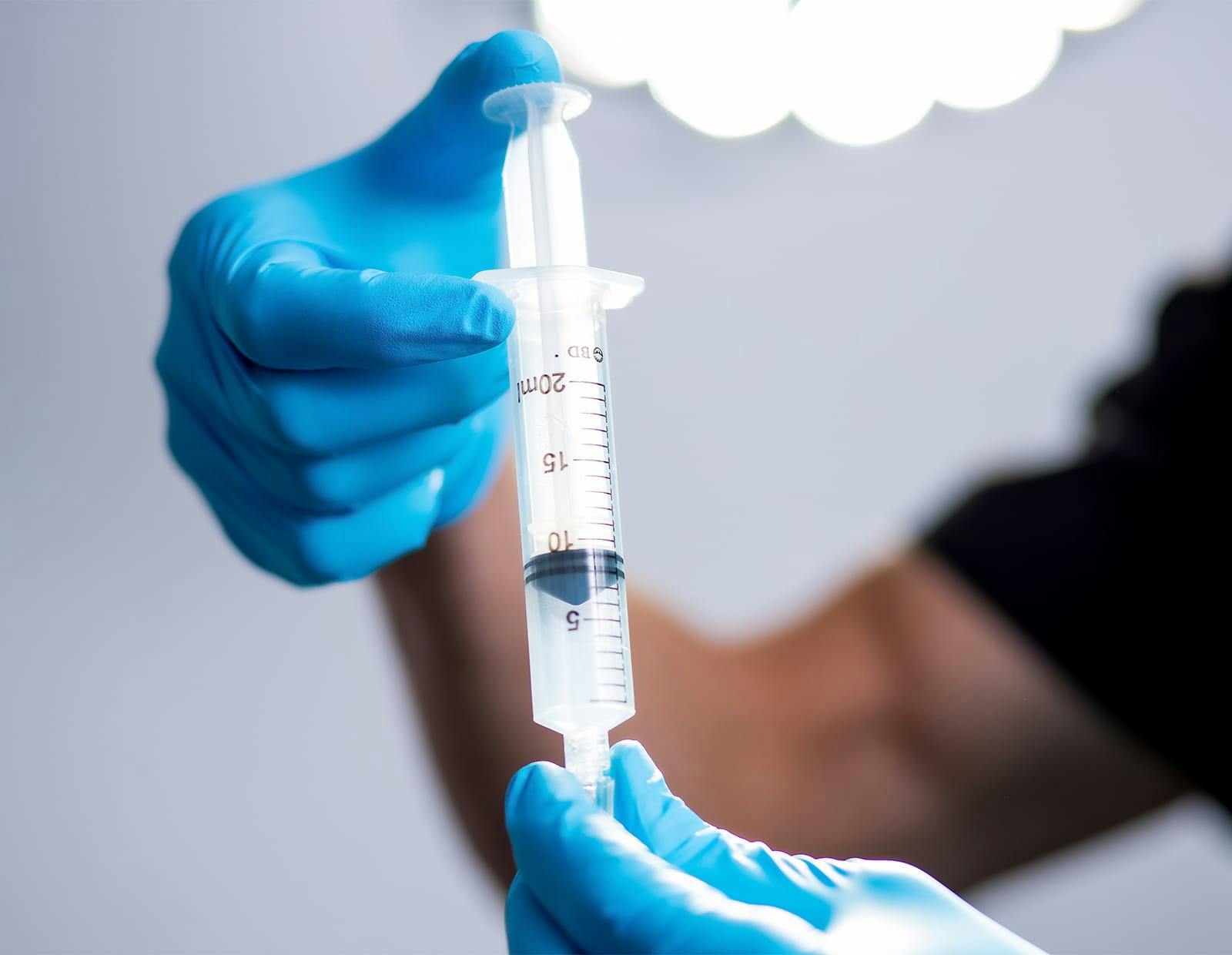
Medical professional preparing a syringe

Conditions Treated With Bone Marrow Aspirate Injections

BMA therapy is used to promote healing and reduce pain across a range of musculoskeletal and spinal conditions, including:

  • Degenerative disc disease of the cervical or lumbar spine
  • Facet joint arthritis and degeneration
  • Sacroiliac joint dysfunction
  • Osteoarthritis of the spine, hip, knee, or shoulder
  • Chronic tendon injuries and tendinopathy
  • Cartilage defects and early-stage joint degeneration
  • Sports injuries involving ligaments, tendons, or cartilage
  • Conditions where patients wish to avoid or delay surgery

It is particularly well-suited for patients in the earlier stages of degenerative conditions who are seeking a non-surgical approach to slowing disease progression and relieving pain.


Are You a Candidate for Bone Marrow Aspirate Injections in Queens?

Good candidates for BMA therapy are generally adults with confirmed degenerative or injury-related musculoskeletal conditions, whose pain has not responded adequately to conservative treatments such as physical therapy, oral medications, or standard injections, and who are seeking a non-surgical option or wish to delay surgical intervention. BMA therapy may not be appropriate for patients with active infection, bleeding disorders, certain blood cancers, or autoimmune conditions, current use of immunosuppressive medications, or a recent corticosteroid injection at the target site.

A thorough medical history review is an essential part of determining candidacy.

Our Queens team will evaluate your condition carefully, review your imaging, and discuss whether BMA therapy or another regenerative approach is the most appropriate fit for your situation.

We’re here to help you move forward.

Contact Us

What to Expect From Bone Marrow Aspirate Injections in Queens

The full procedure, from harvest to injection, is completed in a single outpatient visit and typically takes one to two hours.

Before Your Bone Marrow Aspirate Injection

Your consultation will include a detailed review of your symptoms, imaging, and treatment history. Our team will explain the procedure step by step, discuss what to expect in terms of timing and degree of benefit, and provide pre-procedure instructions.

Patients will be asked to stop NSAIDs at least seven days before the procedure, as these medications can interfere with the platelet and stem cell activity that makes BMA effective. Blood thinners and certain other medications will also need to be addressed in advance.

The Day of Your Surgery

The procedure begins with the harvest phase. Using ultrasound guidance and local anesthesia, bone marrow is drawn from the posterior iliac crest, a region of the pelvis that is safely accessible and naturally rich in stem cells. The aspirate is then placed in a centrifuge to concentrate the most biologically active components.

Once concentrated, the BMAC is injected precisely into the target area under imaging guidance. The entire process is performed on an outpatient basis, and most patients are comfortable throughout.

Recovering After Your Procedure

Some soreness at both the harvest site and injection site is normal for a few days following the procedure. NSAIDs should continue to be avoided during the initial recovery period to avoid interfering with the regenerative process. Improvement is typically gradual, reflecting the biological nature of the treatment. 

Most patients begin to notice meaningful benefit within four to eight weeks, with continued improvement over several months as the regenerative process unfolds. Our team will monitor your progress and discuss next steps, including whether additional treatments may be beneficial.

Background media
Doctor media

Why Choose Gerling Spine Care and Research Institute?

Gerling Spine Care and Research Institute has built regenerative medicine into the core of its clinical mission, not as an afterthought. Our institute's research activities include active engagement with biologic agents such as bone marrow aspirate, PRP, exosomes, and disc cell therapies, and our Queens patients benefit from a team that stays at the forefront of evidence in this rapidly evolving field.

Our lead surgeon has over 40 peer-reviewed publications, and the institute has more than 300 in total, with leadership in NASS, CSRS, and LSRS.

Bone Marrow Aspirate Injections Frequently Asked Questions

How is BMA therapy different from stem cell therapy?

BMA therapy is a form of stem cell therapy, in that bone marrow contains mesenchymal stem cells. However, the term "stem cell therapy" is often used loosely in marketing contexts to describe a wide range of products of varying quality and biological potency. BMAC specifically uses a patient's own concentrated bone marrow, which is among the most rigorously studied and biologically consistent sources of autologous stem cells and growth factors currently available.

How long do the results of BMA injections last?

Results vary depending on the condition treated, the severity of degeneration, and the individual patient's biology. Some patients experience significant and lasting relief; others may benefit from repeat treatments over time. Our team will set realistic expectations based on your specific condition during your consultation.

Can BMA therapy be combined with other regenerative treatments?

Yes. BMA therapy is frequently used in combination with PRP or exosomes to create a more comprehensive regenerative environment at the treatment site. Our Queens team will determine whether a combined approach is appropriate based on your condition and goals.

Is BMA therapy covered by insurance?

Regenerative biologic treatments, including BMAC, are generally not covered by insurance and are considered elective or investigational procedures. Our team will provide transparent information about costs during your consultation so you can make a fully informed decision.

How many BMA injections will I need?

Many patients begin with a single injection and are monitored over several months before determining whether additional treatment is warranted. The number of injections needed varies based on the nature and extent of the condition being treated and the individual's response to therapy.

We're here to help you move forward.

Relief starts with quality orthopedic care. Contact us today to take the next step toward a more active, pain-free life.

Schedule Appointment (opens in a new tab)
Contact us media
Accessibility: If you are vision-impaired or have some other impairment covered by the Americans with Disabilities Act or a similar law, and you wish to discuss potential accommodations related to using this website, please contact our Accessibility Manager at 201-201-7246.
Contact Us