Herniated Disc Pain Has a Precise Solution—and It Doesn't Require a Large Incision

A lumbar herniated disc compressing a spinal nerve can cause some of the most disabling pain imaginable: sharp, radiating leg pain, numbness, tingling, and weakness that can make even basic daily activities feel impossible. Minimally Invasive Lumbar Discectomy directly removes the disc material causing the compression, with the precision of a microscope and the physical footprint of a small incision. At Gerling Spine Care and Research Institute, this procedure reflects everything our Queens patients have come to expect from our surgical team: technical excellence, minimal disruption, and a fast return to normal life.

Contact our Queens office today to find out whether Minimally Invasive Lumbar Discectomy is right for you.

What Is Minimally Invasive Lumbar Discectomy?

Minimally Invasive Lumbar Discectomy is a surgical procedure that removes the portion of a herniated lumbar disc that is compressing a nerve root or the spinal cord. Unlike traditional open discectomy, which requires a large incision and significant retraction of the back muscles, the minimally invasive approach uses a small incision, a tubular retractor system, and specialized instruments to access and remove the problematic disc material with minimal disruption to surrounding tissue.

How the Procedure Works

The surgeon makes a small incision in the lower back over the affected spinal level. A series of progressively sized dilators gently creates a working channel through the back muscles without cutting them. A tubular retractor is then placed to hold the channel open.

Using a microscope or endoscope for magnified visualization, the surgeon removes the herniated disc fragment pressing on the nerve. The nerve is decompressed, the retractor is removed, and the incision is closed. The back muscles are left largely intact throughout.

Minimally Invasive Versus Open Discectomy

Both approaches achieve the same surgical goal, but the minimally invasive technique offers significant advantages in terms of recovery. Smaller incisions, less blood loss, reduced muscle trauma, lower infection risk, and faster return to activity make it the preferred approach for appropriate candidates.

At Gerling Spine Care and Research Institute, minimally invasive technique is a core part of our surgical philosophy, and our team is experienced in applying it across a wide range of spinal conditions.

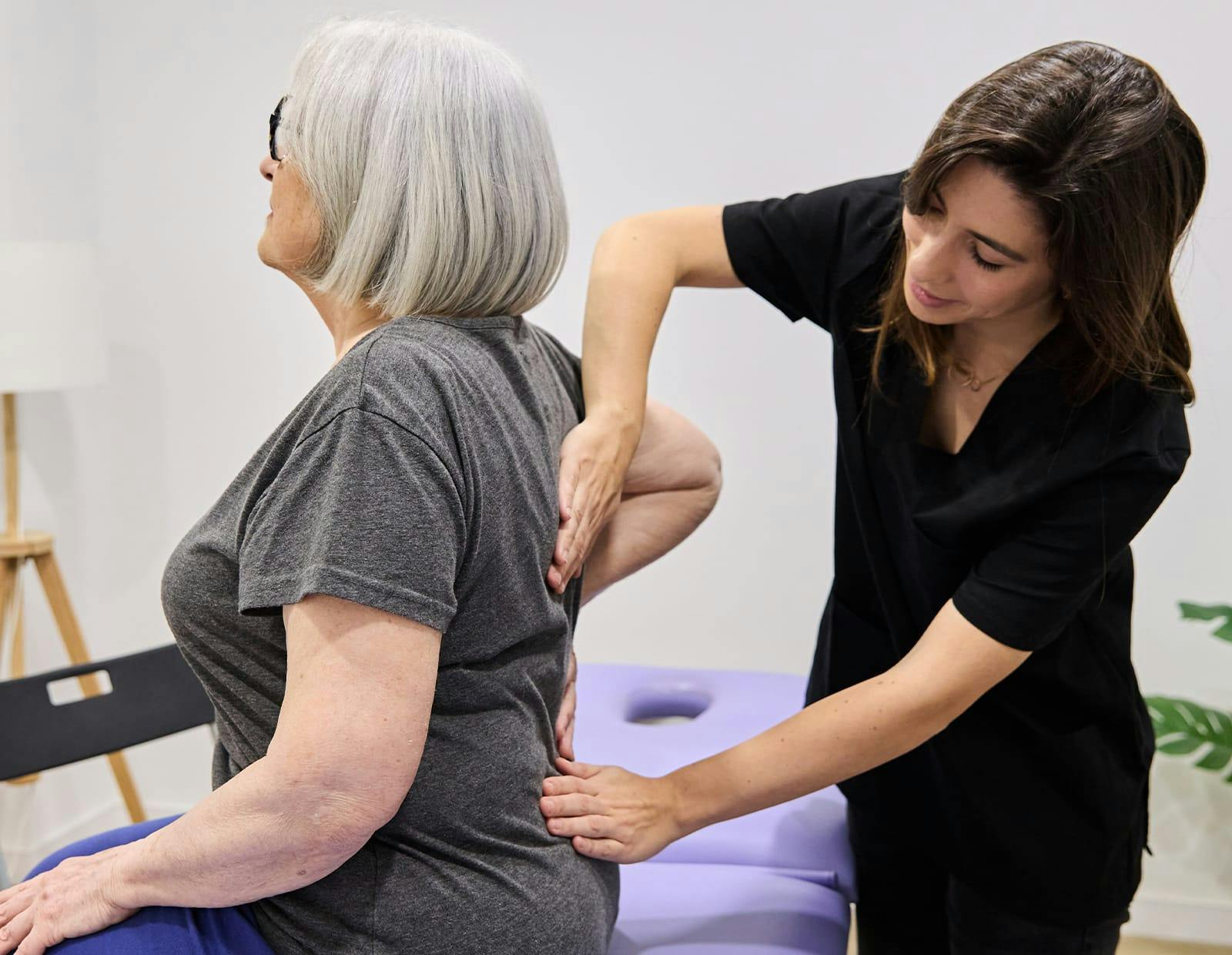
Physical therapist applying pressure to patient’s lower back during evaluation

Conditions Treated With Minimally Invasive Lumbar Discectomy

Minimally Invasive Lumbar Discectomy is used primarily to treat nerve compression in the lower back caused by disc herniation. Appropriate conditions include:

  • Lumbar disc herniation causing radiculopathy (sciatica)
  • Herniated disc with persistent leg pain, numbness, or weakness
  • Lumbar disc herniation causing cauda equina syndrome (urgent cases)
  • Recurrent disc herniation at a previously treated level
  • Bulging disc with significant nerve root compression confirmed on imaging

It is typically recommended after conservative treatments, including physical therapy, anti-inflammatory medications, and epidural steroid injections, have not provided adequate relief over six to twelve weeks.


Are You a Candidate for Minimally Invasive Lumbar Discectomy in Queens?

Good candidates generally have a confirmed lumbar disc herniation on imaging that correlates clearly with their symptoms, including leg pain, numbness, tingling, or weakness. They have typically undergone a reasonable trial of conservative care without adequate relief or present with significant or progressive neurological deficits that warrant more prompt surgical consideration. Minimally invasive discectomy may not be appropriate for all patients.

Those with significant spinal instability, advanced degeneration at multiple levels, or certain anatomical factors may require a different approach. Fusion is occasionally performed alongside discectomy for patients with instability, though it is rarely needed for straightforward herniated disc cases. Our Queens team will conduct a thorough evaluation, including imaging review and full medical history, before making any surgical recommendation.

We’re here to help you move forward.

Contact Us

What to Expect From Your Minimally Invasive Lumbar Discectomy in Queens

From your first consultation to your full recovery, our team is with you at every step.

Before Your Minimally Invasive Lumbar Discectomy

Your consultation will include a detailed review of your symptoms, imaging, and prior treatments. Our surgeons take the time to explain the procedure clearly, confirm that your imaging findings correlate with your symptoms, and walk through all available alternatives before any decision is made.

The Day of Your Surgery

The procedure is performed under general anesthesia and typically takes one to two hours. Most patients are discharged the same day or within 24 hours. Our emphasis on operating room efficiency and minimally invasive technique means less time under anesthesia and a smoother, faster transition to recovery.

Recovering After Your Procedure

Most patients notice significant improvement in leg pain within days of surgery, often describing almost immediate relief from their most disabling symptoms. Return to light activities typically occurs within one to two weeks, with most patients resuming normal routines within four to six weeks.

Patients with physically demanding jobs may require a longer period before returning to full duty. Physical therapy is recommended as part of a full recovery. Our team provides a comprehensive post-operative plan and monitors your progress closely.

Background media
Doctor media

Why Choose Gerling Spine Care and Research Institute?

Gerling Spine Care and Research Institute has built its reputation on minimally invasive surgical excellence. Our lead surgeon has spent decades pioneering techniques that reduce physical impact while maximizing outcomes, including the use of the endoscope and robotic assistance.

With over 40 peer-reviewed publications and the institute has more than 300 in total, Queens patients receive care grounded in the most current clinical evidence, delivered by a team committed to restoring independence as quickly as possible.

Minimally Invasive Lumbar Discectomy Frequently Asked Questions

How is minimally invasive discectomy different from microdiscectomy?

The terms are often used interchangeably, and in many cases, they describe the same procedure. Microdiscectomy typically refers to the use of a surgical microscope for magnification, while minimally invasive discectomy more broadly refers to the use of small incisions and tubular retractors. At Gerling Spine Care and Research Institute, we use both principles together to achieve the most precise, least disruptive result.

Will the disc herniate again after surgery?

Recurrence is possible but not common, occurring in approximately five to fifteen percent of cases. Maintaining a healthy weight, building core strength through physical therapy, and using proper body mechanics can reduce the risk. Our team will discuss strategies for minimizing recurrence during your recovery.

Is the entire disc removed during discectomy?

No. Only the herniated fragment pressing on the nerve is removed. The remainder of the disc is left in place. Removing the entire disc is not necessary for most herniated disc cases and would require a more complex procedure, such as disc replacement or fusion.

How soon can I return to work after a minimally invasive lumbar discectomy?

Patients with desk jobs may return to work within one to two weeks. Those with physically demanding roles may require four to six weeks or longer. Your surgeon will provide specific guidance based on the nature of your work and your individual recovery progress.

What if a discectomy does not relieve my pain?

In cases where discectomy does not provide the expected relief, further evaluation is performed to identify other contributing factors. In some situations, additional treatment such as fusion or repeat imaging may be warranted. Our team will remain closely involved throughout your recovery and address any concerns promptly.

We're here to help you move forward.

Relief starts with quality orthopedic care. Contact us today to take the next step toward a more active, pain-free life.

Schedule Appointment (opens in a new tab)
Contact us media
Accessibility: If you are vision-impaired or have some other impairment covered by the Americans with Disabilities Act or a similar law, and you wish to discuss potential accommodations related to using this website, please contact our Accessibility Manager at 201-201-7246.
Contact Us