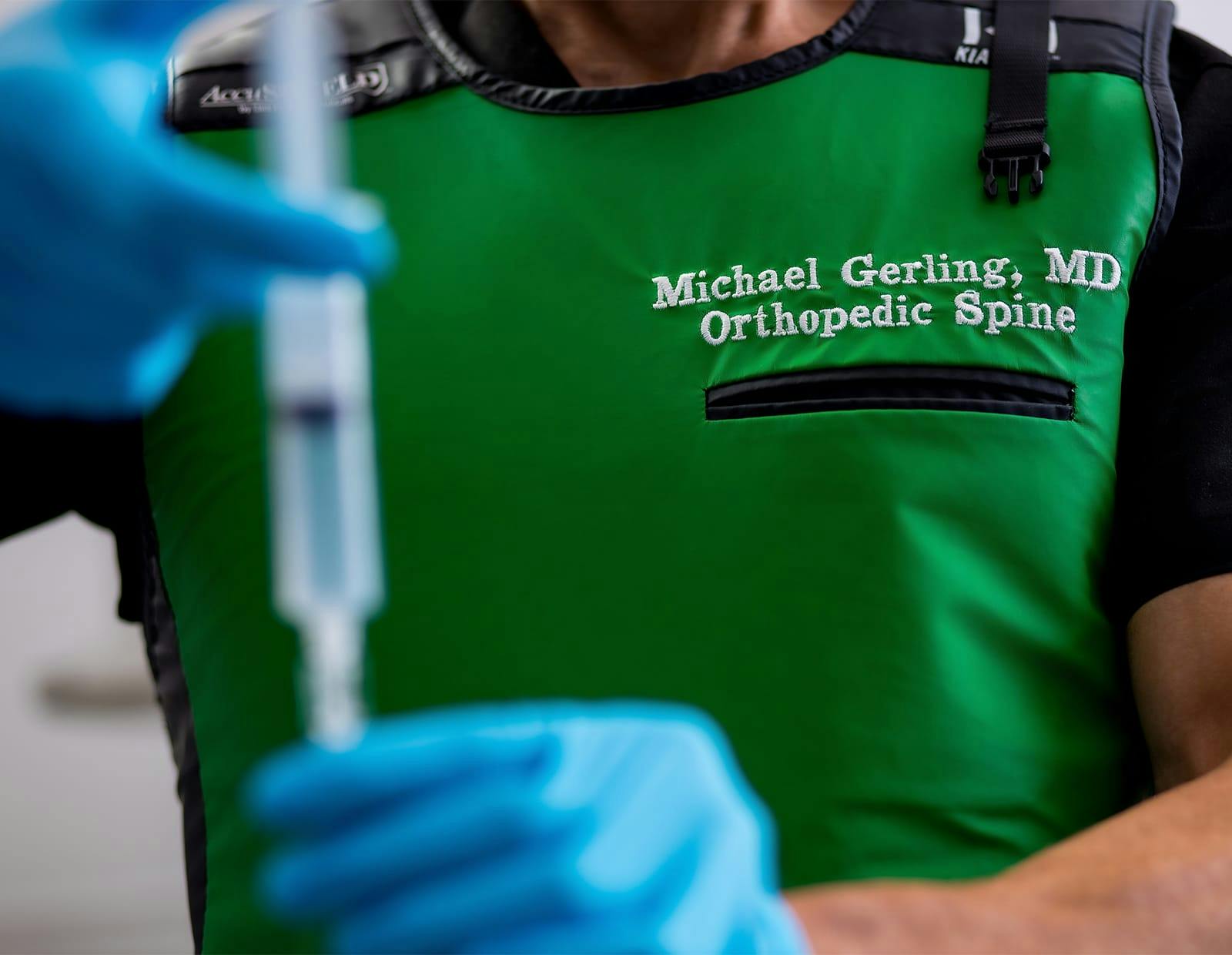
The Answer to Chronic Pain May Already Be Inside You

Platelet-Rich Plasma therapy starts with a simple premise: the human body already contains the growth factors needed to heal damaged tissue. PRP therapy concentrates those factors from a patient's own blood and delivers them precisely to the site of injury or degeneration, amplifying the body's natural repair process.

For Queens patients seeking a non-surgical path forward, PRP injections at Gerling Spine Care and Research Institute offer a well-studied, biologically driven alternative to corticosteroids and other conventional treatments.

Contact our Queens office today to find out whether PRP Injections are the right next step for you.

What Are PRP Injections?

Platelet-Rich Plasma (PRP) is derived from a patient's own blood. A small blood sample is drawn, then placed in a centrifuge that separates and concentrates the platelets—the blood components responsible for clotting and tissue repair—along with the growth factors they carry. This concentrated solution is then injected directly into the area of injury or degeneration.

How PRP Promotes Healing

Platelets release a range of growth factors that regulate cell growth, reduce inflammation, stimulate new tissue formation, and support the repair of damaged structures, including cartilage, tendon, ligament, and disc tissue.

By delivering a concentrated dose of these factors to a specific location, PRP therapy creates a more favorable biological environment for healing than the body can achieve on its own in the setting of chronic degeneration.

PRP Versus Corticosteroid Injections

Corticosteroid injections reduce inflammation effectively but provide temporary relief and can have negative effects on tissue quality with repeated use. PRP, by contrast, works with the body's own biology and is safe for repeated use without the same concerns.

Research suggests PRP can provide longer-lasting relief than steroids for certain conditions, making it a compelling option for patients with chronic or recurring pain.

prp platelet rich plasma injections

Conditions Treated With PRP Injections

PRP therapy is used across a wide range of musculoskeletal and spinal conditions, including:

  • Degenerative disc disease of the cervical or lumbar spine
  • Facet joint arthritis and degeneration
  • Sacroiliac joint pain and dysfunction
  • Osteoarthritis of the spine, hip, knee, or shoulder
  • Chronic tendinopathy and tendon injuries
  • Ligament sprains and partial tears
  • Muscle injuries and chronic soft tissue pain
  • Sports injuries involving joints, tendons, or cartilage

It is particularly valuable for patients who have not responded adequately to physical therapy or conventional injections and are looking to avoid or delay surgery.


Are You a Candidate for PRP Injections in Queens?

PRP therapy is well-suited for adults with confirmed musculoskeletal or spinal pain caused by degenerative or injury-related conditions who are seeking a non-surgical regenerative option. Ideal candidates are generally in good overall health, have realistic expectations about the gradual nature of regenerative treatment, and have not achieved lasting relief from prior conservative care. PRP may not be appropriate for patients with active infection, bleeding disorders, certain blood conditions, or current use of blood-thinning medications.

NSAIDs should be discontinued at least seven days before the procedure, as they can interfere with platelet activity and reduce the effectiveness of the treatment.

Our Queens team will conduct a thorough evaluation before recommending PRP, and will discuss whether PRP alone or in combination with other regenerative therapies is the most appropriate approach for your condition.

We’re here to help you move forward.

Contact Us

What to Expect From PRP Injections in Queens

PRP is a streamlined outpatient procedure that is typically completed within 30 to 45 minutes from blood draw to injection.

Before Your PRP Injection

Your consultation will include a review of your symptoms, imaging, and treatment history. Our team will provide clear pre-procedure instructions, including guidance on stopping NSAIDs and any other relevant medications in advance. We will also discuss realistic timelines for improvement and what a positive response is likely to look like for your specific condition.

The Day of Your Surgery

A small amount of blood is drawn from your arm, processed through a centrifuge to concentrate the platelets, and then injected under imaging guidance into the target area. The procedure is minimally invasive and does not require general anesthesia. Most patients experience only mild discomfort during the injection, and any soreness afterward is typically manageable with rest and ice.

Recovering After Your Procedure

NSAIDs should be avoided for at least one to two weeks following the injection to protect the platelet activity driving the healing response. Some patients notice an initial increase in soreness before improvement begins, which is a normal part of the inflammatory healing process that PRP stimulates.

Meaningful improvement typically develops gradually over four to eight weeks, with continued progress over several months. Many patients benefit from a series of two to three injections for optimal results, and our team will monitor your progress and adjust your plan accordingly.

Background media
Doctor media

Why Choose Gerling Spine Care and Research Institute?

Few private practices bring the level of academic engagement to regenerative medicine that Gerling Spine Care and Research Institute does. Our clinical team actively follows the evolving evidence base for PRP and other biologic therapies, and our Queens patients benefit from treatment protocols grounded in current research rather than trends.

With more than 300 peer-reviewed publications across the institute and a long-standing commitment to advancing spine and musculoskeletal care, we approach every regenerative case with the same rigor we bring to complex surgery.

PRP Injections Frequently Asked Questions

How is PRP different from bone marrow aspirate therapy?

Both are regenerative biologics derived from the patient's own body, but they differ in their cellular composition. PRP concentrates platelets and growth factors from blood. Bone marrow aspirate additionally contains mesenchymal stem cells, which may offer a stronger regenerative stimulus for more advanced tissue damage. The two therapies can also be combined for enhanced effect.

How many PRP injections will I need?

Many conditions respond well to a series of two to three injections spaced several weeks apart. Some patients achieve meaningful relief from a single treatment. The appropriate number depends on the condition being treated, its severity, and the individual's response. Our team will guide you through this process based on your progress.

Is PRP therapy covered by insurance?

PRP injections are generally not covered by insurance and are considered a regenerative or investigational treatment. Our Queens team will provide transparent information about costs during your consultation.

How long do the effects of PRP last?

Results vary by condition and individual. Many patients experience meaningful relief lasting six months to over a year. For degenerative conditions, periodic repeat treatments may be recommended to sustain the benefit as the underlying condition evolves.

Can PRP be used alongside other treatments?

Yes. PRP is frequently incorporated into a broader treatment plan that may include physical therapy, activity modification, and, in some cases, other regenerative therapies such as bone marrow aspirate or exosomes. Our team takes an integrative approach to regenerative care, ensuring each patient's plan is tailored to their specific needs and goals.

We're here to help you move forward.

Relief starts with quality orthopedic care. Contact us today to take the next step toward a more active, pain-free life.

Schedule Appointment (opens in a new tab)
Contact us media
Accessibility: If you are vision-impaired or have some other impairment covered by the Americans with Disabilities Act or a similar law, and you wish to discuss potential accommodations related to using this website, please contact our Accessibility Manager at 201-201-7246.
Contact Us