Targeted Relief, Right Where It Hurts

When spinal nerve pain from a herniated disc, stenosis, or radiculopathy becomes difficult to manage with medication or physical therapy alone, an epidural injection can deliver powerful anti-inflammatory medication directly to the source of the problem. At Gerling Spine Care and Research Institute, epidural injections are an important part of our comprehensive, conservative-first approach to spine care for our Queens patients.

Contact our Queens office today to find out whether an epidural injection is the right next step for you.

What Are Epidural Injections?

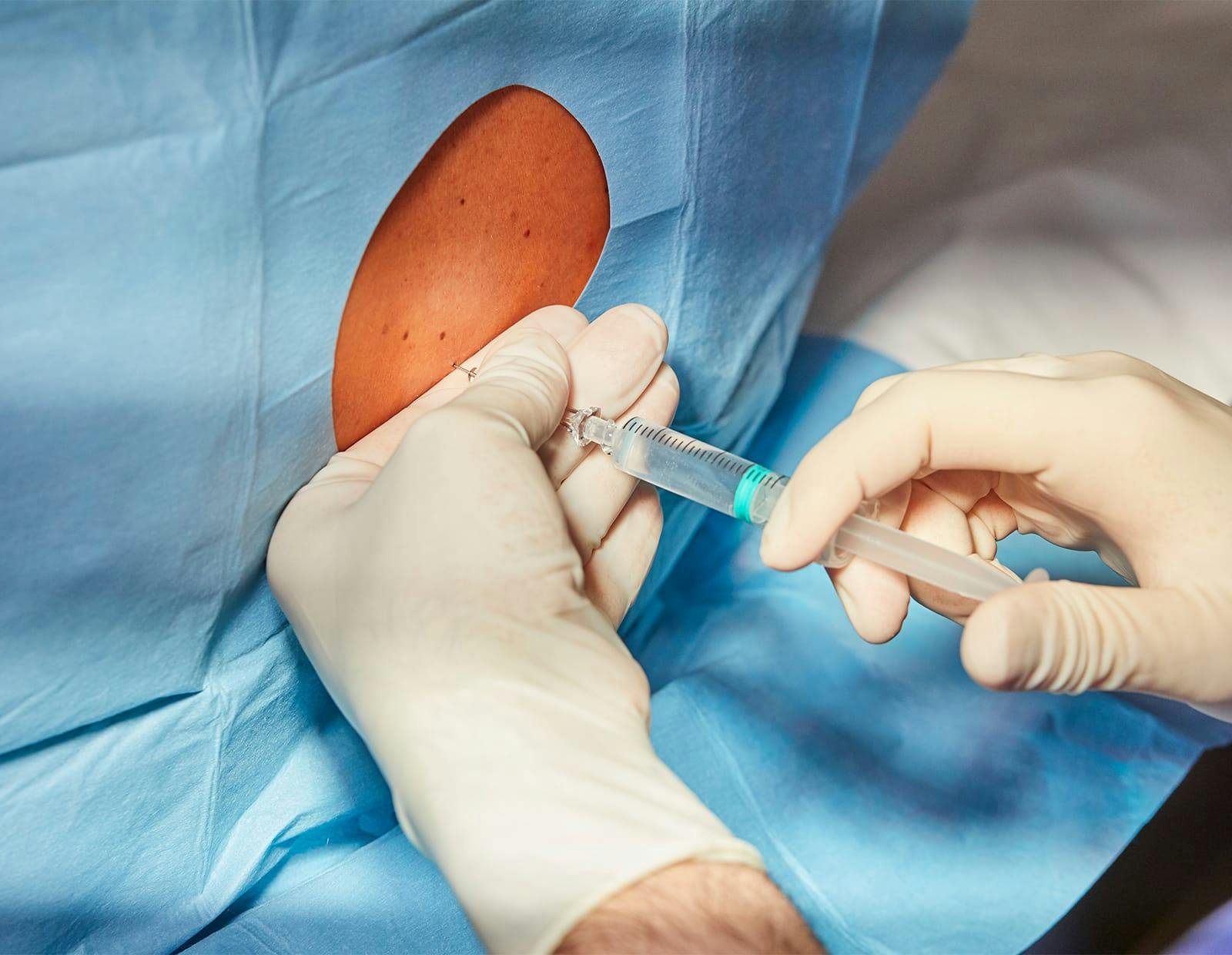
An epidural steroid injection (ESI) delivers a combination of corticosteroid and local anesthetic into the epidural space—the area between the protective covering of the spinal cord and the surrounding vertebrae. The corticosteroid reduces inflammation around the compressed or irritated nerve root, while the anesthetic provides immediate short-term relief.

The goal is not to cure the underlying condition, but to reduce pain and inflammation enough to allow the patient to function more comfortably, participate in physical therapy, and, in many cases, avoid or delay surgery.

blurry taxi

Types of Epidural Injections

Not all epidural injections are the same. The approach used depends on the location of the affected nerve, the nature of the condition being treated, and the patient's anatomy. At Gerling Spine Care and Research Institute, our Queens team selects the most appropriate technique for each individual.

Transforaminal Epidural Injection

The transforaminal approach delivers medication directly to the opening through which a specific nerve root exits the spine. It is the most targeted of the three approaches and is generally the preferred method for lumbar radiculopathy, as it places the medication closest to the affected nerve root.

Interlaminar Epidural Injection

The interlaminar approach places the needle between two adjacent vertebrae in the midline of the spine and delivers medication into the broader epidural space. It is commonly used for cervical and thoracic conditions, as well as lumbar cases where multilevel or bilateral symptoms are present.

Caudal Epidural Injection

The caudal approach accesses the epidural space through the sacral hiatus at the base of the spine. It is used for lower lumbar and sacral nerve conditions and may be preferred when prior surgery or anatomical variation makes other approaches less feasible.

Epidural injection

Conditions Treated With Epidural Injections

Epidural injections are used to treat a wide range of spinal conditions that cause nerve-related pain, including:

  • Lumbar or cervical radiculopathy (pinched nerve)
  • Herniated or bulging disc
  • Spinal stenosis
  • Sciatica
  • Degenerative disc disease with nerve involvement
  • Spondylolisthesis with radicular symptoms
  • Post-surgical pain or failed back surgery syndrome

They are typically recommended after initial conservative treatments, such as rest, oral medications, and physical therapy, have not provided adequate relief.


Are You a Candidate for Epidural Injections in Queens?

Epidural injections are appropriate for patients experiencing significant nerve-related pain that has not responded sufficiently to first-line conservative care. They are particularly well-suited for patients with a clearly identified source of nerve compression on imaging, whose symptoms correspond to that finding.

They may not be appropriate for patients with active infection, bleeding disorders, or allergy to the medications used.

Patients on blood thinners may need to pause their medication before the procedure, and this will be discussed during your consultation.

Our Queens team will review your symptoms and imaging before recommending any injection approach, and will always place it in the context of your broader treatment plan.

We’re here to help you move forward.

Contact Us

What to Expect From Epidural Injections in Queens

Epidural injections are outpatient procedures. Most patients are in and out within an hour and return home the same day.

Before Your Epidural Injection

Your consultation will include a review of your symptoms, imaging, and prior treatments. Our team will explain the procedure, discuss realistic expectations for relief, and answer all questions before moving forward. If you take blood thinners or have other relevant health conditions, we will provide specific pre-procedure instructions.

The Day of Your Surgery

The procedure is performed with fluoroscopic (real-time X-ray) guidance to ensure precise needle placement. You will lie on a table, the injection site will be cleaned and numbed with local anesthetic, and the needle will be carefully guided to the correct position in the epidural space.

The injection itself takes only a few minutes. Some patients experience temporary soreness at the injection site for one to two days following the procedure.

Recovering After Your Procedure

Most patients can resume light activities the same day or the day after their injection. Pain relief may begin within a few days as the corticosteroid takes effect, though some patients notice improvement sooner from the local anesthetic.

Relief duration varies; some patients benefit for several weeks, others for several months. Repeat injections may be recommended as part of an ongoing management plan, typically no more than three to six times per year.

Background media
Doctor media

Why Choose Gerling Spine Care and Research Institute?

Gerling Spine Care and Research Institute takes a conservative-first approach to spine care, and epidural injections are a central tool in our non-surgical treatment toolkit. Our lead surgeon has over 40 peer-reviewed publications, and the institute has more than 300 in total.

Queens patients benefit from a team that combines precision, clinical experience, and a genuine commitment to finding the least invasive solution — and to reserving surgery only for those who truly need it.

Epidural Injections Frequently Asked Questions

How long does an epidural injection take?

The procedure itself takes only a few minutes, though the full appointment — including preparation and a brief monitoring period afterward — typically lasts about an hour. Most patients are discharged and home within the same morning or afternoon.

How soon will I feel relief after an epidural injection?

Some patients notice immediate short-term relief from the local anesthetic component. The corticosteroid typically takes two to seven days to reach its full effect. Responses vary, and not every patient experiences the same degree of benefit.

How many epidural injections can I receive?

Guidelines generally recommend no more than three to six injections per year at a given spinal level, depending on the clinical situation. For new disc herniations, injections may be given closer together with the goal of complete resolution. For chronic conditions, longer intervals between injections are typical.

Can an epidural injection tell us where my pain is coming from?

Yes, in some cases. A selective nerve root block—which uses a local anesthetic alone rather than a steroid—can help confirm whether a specific nerve root is the source of a patient's pain. If the injection significantly reduces symptoms, it helps pinpoint the pain generator and informs further treatment decisions.

Will an epidural injection fix my underlying condition?

No. Epidural injections reduce inflammation and relieve symptoms but do not address the structural cause of nerve compression. They are a valuable part of a broader treatment plan — one that may include physical therapy, activity modification, and in some cases surgery — but are not a permanent cure on their own.

We're here to help you move forward.

Relief starts with quality orthopedic care. Contact us today to take the next step toward a more active, pain-free life.

Schedule Appointment (opens in a new tab)
Contact us media
Accessibility: If you are vision-impaired or have some other impairment covered by the Americans with Disabilities Act or a similar law, and you wish to discuss potential accommodations related to using this website, please contact our Accessibility Manager at 201-201-7246.
Contact Us