Finding the Source of Radiating Pain Is the Key to Successful Treatment

Pain that travels from the spine into the arm or leg is not random; it follows the path of a specific nerve root, and that pattern carries diagnostic information. Radiculopathy is one of the most common conditions in spine care, and it is also one of the most treatable. The majority of patients find meaningful relief without surgery. For those who do require intervention, identifying the correct structural source before treatment begins is what separates a plan that works from one that does not.

At Gerling Spine Care and Research Institute, patients at our Bayonne location receive a thorough diagnostic evaluation and access to every treatment option available, guided by a team that brings both conservative and surgical depth to every case it manages. Contact our Bayonne office today to schedule a consultation and start moving toward lasting relief.

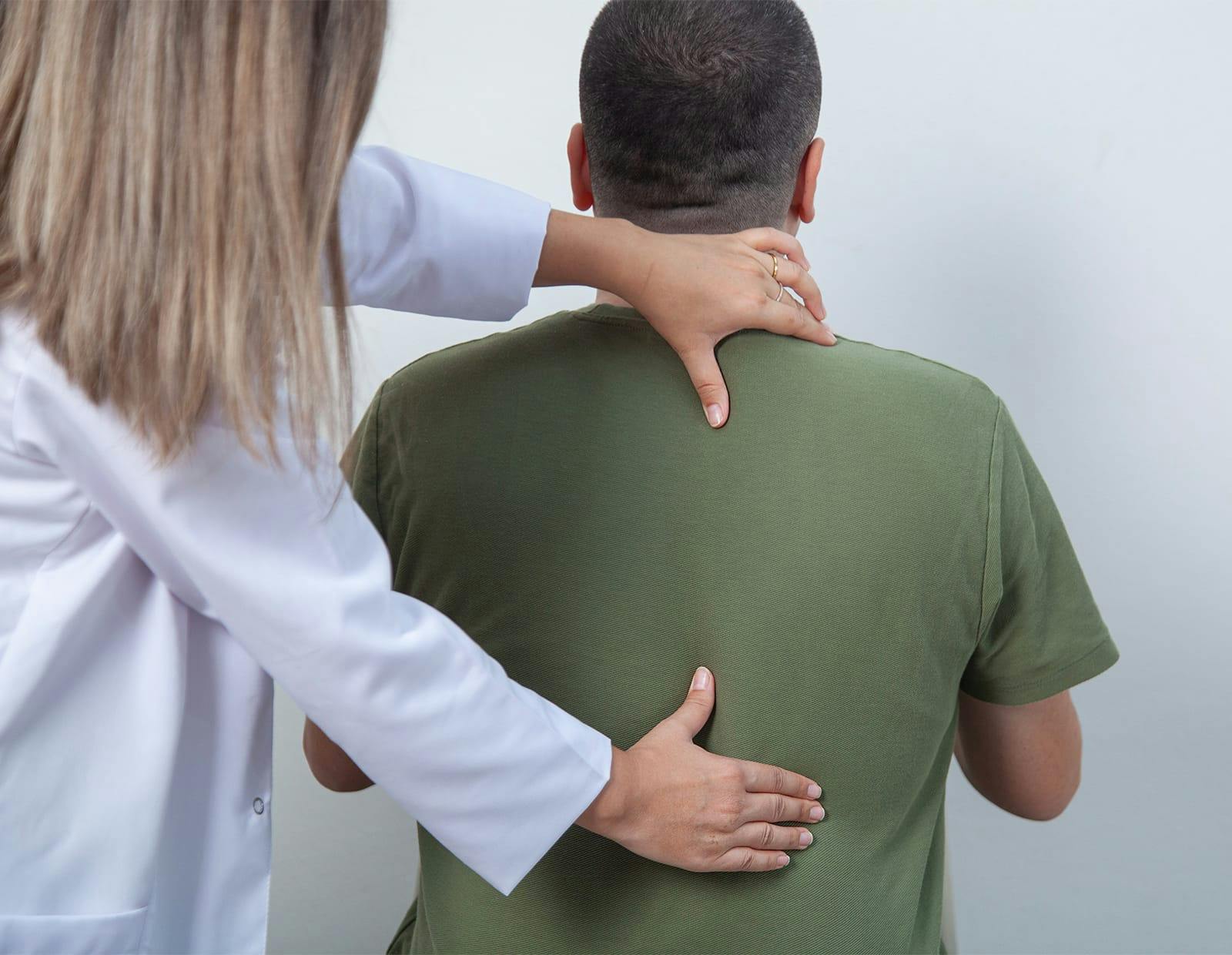
Medical professional examining a patient's lower back

What Is Radiculopathy?

When a nerve root exits the spinal canal, and something compresses or irritates it along the way, like a herniated disc, a bone spur, or a narrowed foramen, the nerve responds by sending signals along its entire length. The result is pain, numbness, tingling, or weakness that the patient feels not at the spine itself but somewhere along the arm or leg that the nerve supplies. That traveling quality is what defines radiculopathy and what makes it clinically useful: the distribution of symptoms points directly toward which nerve root is involved.

We’re here to help you move forward.

Contact Us

Types of Radiculopathy

The location of the nerve root compression determines the symptom pattern and shapes the entire treatment approach.

Cervical Radiculopathy

When compression occurs at a cervical nerve root, the symptoms it generates travel outward from the neck into the shoulder, arm, or hand. The specific distribution, which part of the arm is affected, where the numbness sits, and which movements provoke it, varies depending on which cervical level is involved and helps guide the diagnostic process. Herniated cervical discs and foraminal narrowing from degenerative changes are the most frequent structural causes.

Lumbar Radiculopathy

Lumbar radiculopathy is the form most patients are already familiar with, even if they do not know it by that name. Lower lumbar nerve root compression produces symptoms that travel through the buttock and down the leg, with the exact pathway determined by which nerve root is being compressed. The sciatic nerve, formed by several lower lumbar and sacral nerve roots, is the most commonly involved, which is why lumbar radiculopathy so frequently presents as what patients call sciatica. Disc herniation and lumbar stenosis account for the large majority of cases.

Thoracic Radiculopathy

Thoracic radiculopathy is an uncommon but real presentation that is frequently overlooked because clinicians are less accustomed to looking for it. Compression of a thoracic nerve root produces symptoms that wrap around the trunk in a horizontal band at the affected level, sometimes described as a tightening or burning sensation around the chest or abdomen. Because this pattern does not follow the familiar arm or leg distributions of cervical or lumbar radiculopathy, it can go unrecognized for some time before the correct diagnosis is made.

Symptoms of Radiculopathy

Presentation varies based on which nerve root is affected and the degree of compression. Common features include:

  • Radiating pain traveling from the spine into the arm or leg
  • Numbness or tingling in the arm, hand, leg, or foot
  • Muscle weakness in the affected limb
  • Sharp, burning, or electric-quality pain that worsens with specific movements or positions
  • Reduced reflexes in the affected extremity

Symptoms affecting both limbs simultaneously, or any change in bladder or bowel function, may point to a more serious condition and warrant prompt evaluation.

Banner media

What Causes Radiculopathy?

Radiculopathy develops when a structural problem reduces the space a nerve root needs to exit the spinal canal. The most common culprits include:

  • A herniated or bulging disc pressing directly on a nerve root
  • Spinal stenosis, narrowing of the canal or the foraminal openings through which nerve roots exit
  • Bone spurs from degenerative facet joint disease
  • Spondylolisthesis compressing the exiting nerve root
  • Degenerative disc disease with associated foraminal narrowing
  • Less commonly, spinal tumors, cysts, or infections
white orchid plant

How Radiculopathy Is Treated at Gerling Spine Care and Research Institute

Treatment at our Bayonne location starts conservatively and advances based on how each patient responds and what the underlying structural cause requires.

Conservative Treatment

The starting point for most radiculopathy patients is a structured non-surgical approach. Physical therapy plays a central role; not generic exercise, but a targeted program aimed at reducing mechanical load on the affected nerve root, restoring the strength and flexibility of the supporting spinal structures, and teaching the patient movement and postural habits that prevent further irritation. Anti-inflammatory medications and a temporary period of activity modification support the process, particularly in the acute phase when nerve inflammation is at its peak.

Interventional Pain Management

When conservative care has not produced sufficient improvement, targeted injections deliver anti-inflammatory medication directly to the irritated nerve root and create better conditions for recovery. Options at our Bayonne location include epidural steroid injections to reduce nerve root inflammation, transforaminal selective nerve root blocks for more precise delivery and diagnostic confirmation, and medial branch block injections when facet joint involvement is suspected alongside the radiculopathy.

Minimally Invasive and Surgical Treatment

Surgery becomes appropriate when conservative and interventional treatment has not produced adequate improvement after a reasonable trial, or when neurological deficits are significant or continuing to worsen. The surgical approach depends entirely on the location and structural cause of the compression, and may include:

  • ACDF or artificial cervical disc replacement for cervical radiculopathy
  • Minimally invasive lumbar discectomy or endoscopic discectomy for lumbar nerve root compression from disc herniation
  • Laminectomy or foraminotomy for nerve root compression from stenosis
  • Lumbar fusion for cases involving instability or spondylolisthesis alongside the nerve compression
Background media

Are You a Candidate for Radiculopathy Treatment in Bayonne?

The threshold for seeking evaluation for radiculopathy is low, and appropriately so. Radiating arm or leg pain, numbness, tingling, or limb weakness that has been present for more than a few weeks and is affecting daily life is reason enough to be seen. Waiting for symptoms to become severe before seeking evaluation does not improve outcomes and, in some cases, allows neurological changes to progress that might have been caught and addressed earlier. Surgical candidacy is a separate question from evaluation candidacy, and one our Bayonne team approaches individually for each patient based on what the imaging shows, what has already been tried, how long symptoms have been present, and whether any neurological deficit is stable or worsening.

Doctor media

Why Choose Gerling Spine Care and Research Institute?

What makes radiculopathy care straightforward in concept—find the compressed nerve, decompress it—is often complicated in practice by overlapping pathology, atypical presentations, and patients who have already tried multiple treatments without success. Navigating those situations well requires a team with genuine diagnostic depth and the full range of treatment options to act on whatever the evaluation reveals. At Gerling Spine Care and Research Institute, our Bayonne team has built that depth over decades of focused spine practice, and our research program, with more than 300 peer-reviewed publications, ensures that the care we provide reflects current evidence rather than outdated convention.

Radiculopathy Frequently Asked Questions

How is radiculopathy different from a pinched nerve?

The two terms are often used interchangeably. Radiculopathy describes the full pattern of symptoms produced when a spinal nerve root is compressed or irritated, including pain, numbness, tingling, and weakness. Pinched nerve is the more colloquial term for the same underlying problem.

Can radiculopathy resolve on its own?

Many cases, particularly those caused by lumbar disc herniation, do improve with time and conservative care as herniated material is gradually reabsorbed. However, symptoms that are severe, worsening, or accompanied by progressive neurological deficit should not be left unmonitored, and any case failing to improve meaningfully within several weeks deserves a formal evaluation.

How long does it take for radiculopathy to improve?

Recovery timelines depend on the cause, severity, and treatment approach. Many patients with disc herniation see meaningful improvement within six to twelve weeks of conservative management. Surgical patients, particularly those undergoing minimally invasive discectomy, often experience rapid relief from radiating symptoms within days of the procedure.

Is radiculopathy the same as sciatica?

Sciatica is a specific form of lumbar radiculopathy involving compression of the nerve roots forming the sciatic nerve, producing pain that travels through the buttock and down the leg. All sciatica is lumbar radiculopathy, but not all lumbar radiculopathy is sciatica, as other lumbar nerve roots can be involved without producing classic sciatic symptoms.

When should I seek evaluation for radiculopathy?

Evaluation is appropriate when symptoms have persisted for more than a few weeks, are interfering with daily activities, or include any degree of progressive weakness. Bilateral leg symptoms, saddle area numbness, or changes in bladder or bowel function require immediate evaluation as they may indicate a more serious condition affecting the spinal cord or cauda equina.

We're here to help you move forward.

Relief starts with quality orthopedic care. Contact us today to take the next step toward a more active, pain-free life.

Schedule Appointment (opens in a new tab)
Contact us media
Accessibility: If you are vision-impaired or have some other impairment covered by the Americans with Disabilities Act or a similar law, and you wish to discuss potential accommodations related to using this website, please contact our Accessibility Manager at 201-201-7246.
Contact Us