Pinched Nerve Pain Is More Than a Nuisance, and You Don't Have to Live With It

Radiculopathy — the radiating pain, numbness, and weakness caused by a compressed or irritated spinal nerve root — can disrupt every aspect of daily life. The good news is that most cases respond well to treatment, and surgery is often not required. At Gerling Spine Care and Research Institute, our Queens patients receive a thorough, individualized evaluation and access to the full spectrum of care, from conservative management to advanced minimally invasive surgery.

Contact our Queens office today to schedule a consultation and take the first step toward lasting relief.

What Is Radiculopathy?

Radiculopathy occurs when a nerve root in the spine becomes compressed, pinched, or irritated, causing symptoms that radiate outward from the spine into the arms, hands, legs, or feet. The term refers to the pattern of symptoms rather than a single specific diagnosis, and it can affect different regions of the spine.

Types of Radiculopathy

The location of the compressed nerve root determines both the symptoms and the appropriate treatment approach.

  • Cervical radiculopathy affects nerve roots in the neck and typically causes pain, numbness, tingling, or weakness that radiates into the shoulder, arm, or hand. It is often caused by a herniated cervical disc or age-related narrowing of the nerve root canal.
  • Lumbar radiculopathy affects nerve roots in the lower back and is commonly known as sciatica when the sciatic nerve is involved. Symptoms typically radiate from the lower back through the buttocks and down one or both legs. It is most often caused by a herniated lumbar disc or lumbar spinal stenosis.
  • Thoracic radiculopathy, affecting the mid-spine, is less common but can cause pain or numbness that wraps around the torso.
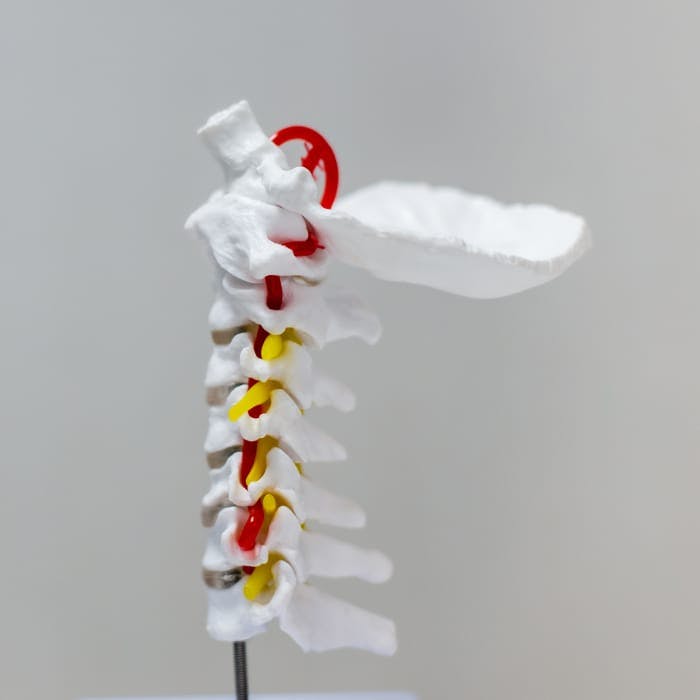
spine
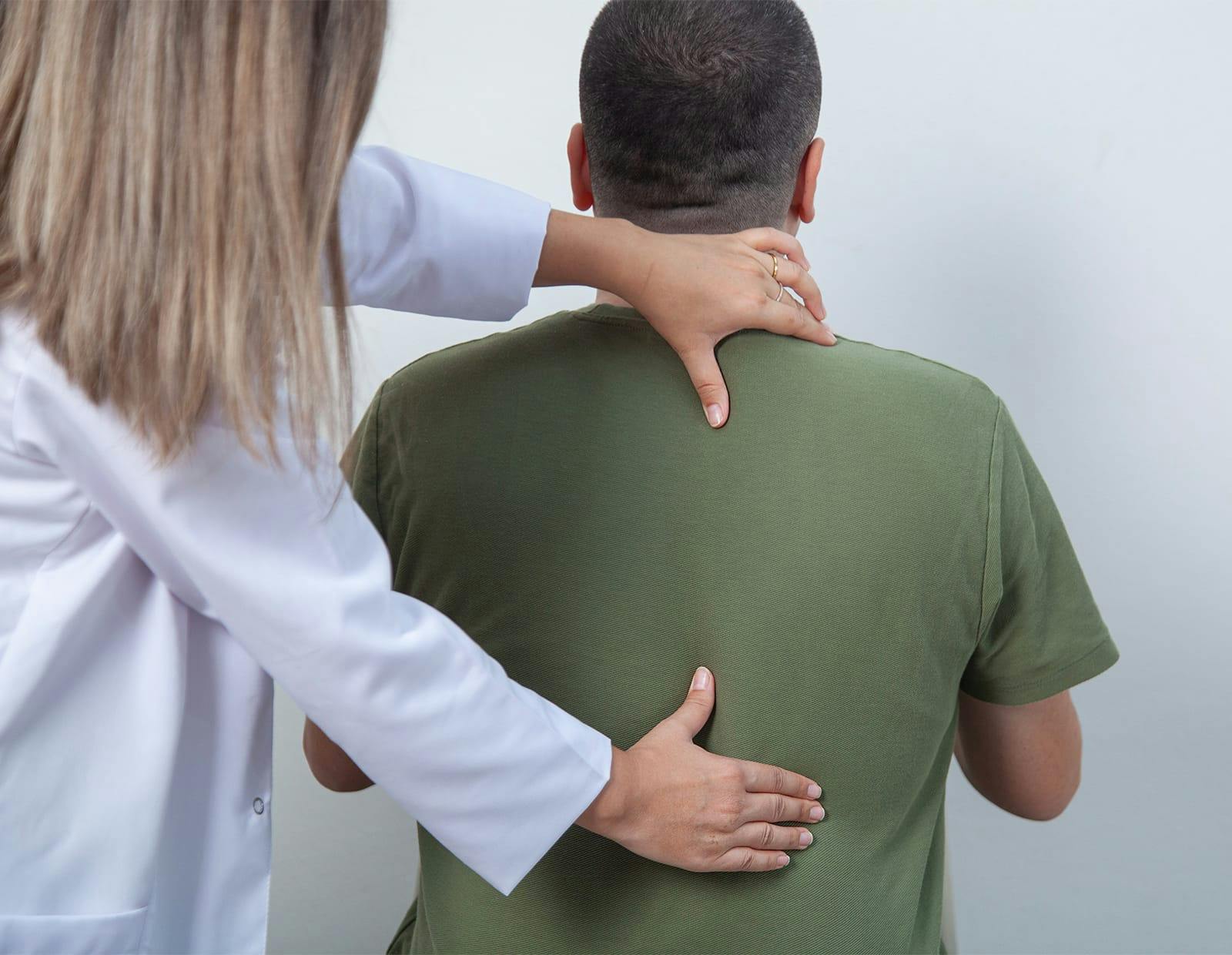
Medical professional examining a patient's lower back

Symptoms of Radiculopathy

Radiculopathy symptoms vary depending on which nerve root is affected and how severely it is compressed. Common symptoms include:

  • Radiating pain that travels from the spine into the arm or leg
  • Numbness or tingling in the arm, hand, leg, or foot
  • Muscle weakness in the affected limb
  • Sharp or burning pain that worsens with certain movements
  • Loss of reflexes in the affected area

Symptoms can range from mild and intermittent to severe and constant. When weakness is progressive or symptoms significantly limit function, prompt evaluation is important.


What Causes Radiculopathy?

Radiculopathy most commonly results from conditions that reduce the space available for nerve roots as they exit the spinal canal.

Common causes include:

  • Herniated or bulging disc pressing on a nerve root
  • Spinal stenosis (narrowing of the spinal canal or nerve root openings)
  • Bone spurs caused by degenerative arthritis
  • Spondylolisthesis (vertebral slippage)
  • Degenerative disc disease
  • Spinal tumors or infections (less common)

We’re here to help you move forward.

Contact Us

How Radiculopathy Is Treated

At Gerling Spine Care and Research Institute, we approach radiculopathy with a strong preference for the least invasive, effective treatment. Surgery is reserved for cases where conservative care has failed or where neurological symptoms are severe or worsening.

Conservative Treatment

The majority of radiculopathy cases improve with non-surgical care. Conservative options we may recommend include rest and activity modification, anti-inflammatory medications, physical therapy to reduce muscle tension and strengthen the core, and cervical or lumbar epidural steroid injections to reduce nerve inflammation and relieve pain.

Minimally Invasive and Surgical Treatment

When conservative treatment does not provide adequate relief — typically after six to twelve weeks — or when neurological symptoms are significant, surgical intervention may be considered. Depending on the location and cause of the radiculopathy, appropriate surgical options may include:

  • Anterior Cervical Discectomy and Fusion (ACDF) for cervical radiculopathy caused by a herniated disc or stenosis
  • Artificial Cervical Disc Replacement as a motion-preserving alternative for eligible patients
  • Endoscopic Discectomy for minimally invasive disc removal in both the cervical and lumbar spine
  • Minimally Invasive Lumbar Discectomy for lumbar nerve root compression
  • Lumbar Fusion for cases involving instability or spondylolisthesis

Our Queens team will identify the most appropriate surgical approach based on your imaging, symptoms, and overall health.

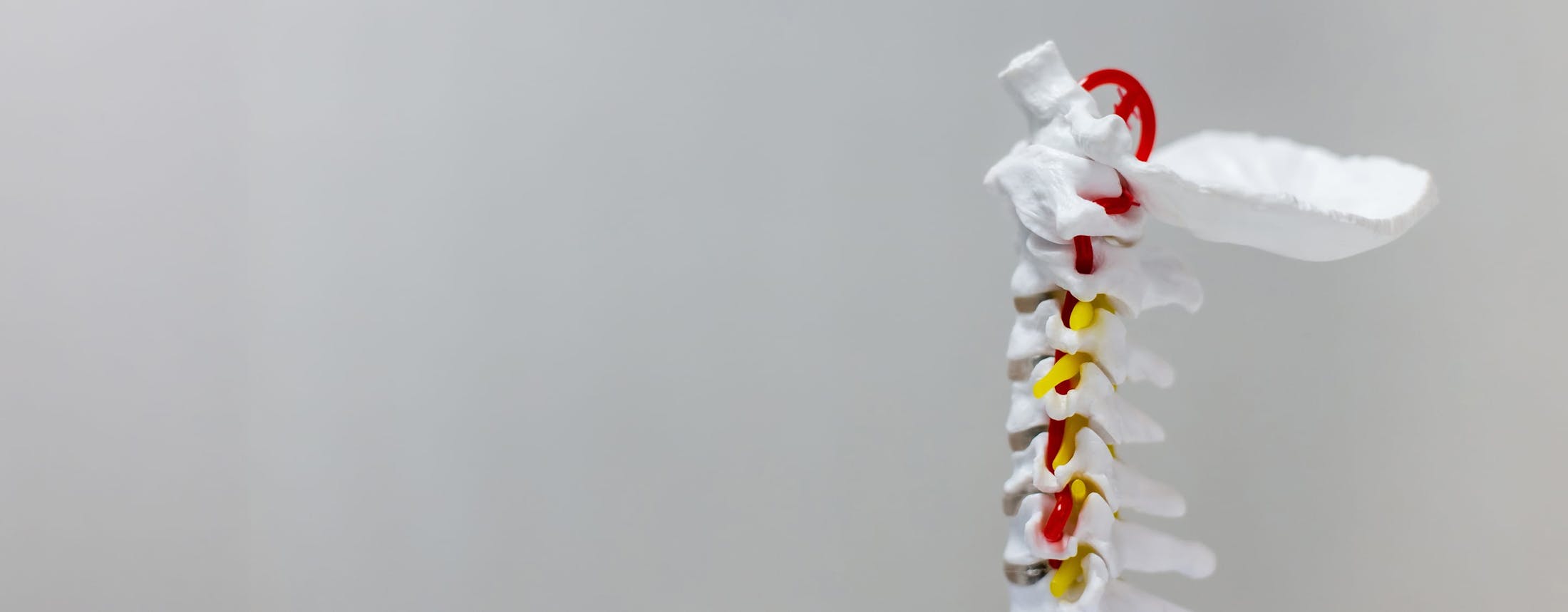
Background media

Are You a Candidate for Radiculopathy Treatment in Queens?

Anyone experiencing radiating arm or leg pain, numbness, tingling, or weakness that has not resolved with rest or basic care is a candidate for evaluation. Early assessment allows us to identify the cause, rule out serious underlying conditions, and begin the most appropriate treatment before symptoms worsen.

Surgical candidacy is evaluated on an individual basis and depends on the location of compression, severity of symptoms, duration of the condition, and response to conservative care. Our Queens team welcomes patients at any stage of their radiculopathy — whether newly diagnosed or struggling with long-standing symptoms that have not responded to prior treatment.

Doctor media

Why Choose Gerling Spine Care and Research Institute?

Gerling Spine Care and Research Institute brings together conservative care and surgical expertise under one roof, giving Queens patients a genuinely comprehensive approach to radiculopathy. Our lead surgeon has over 40 peer-reviewed publications, and the institute has more than 300 in total. We are committed to avoiding unnecessary surgery whenever possible, and when surgery is needed, delivering it with the precision and minimally invasive technique that leads to the fastest possible recovery.

Radiculopathy Frequently Asked Questions

How is radiculopathy different from a pinched nerve?

Radiculopathy and pinched nerve are often used interchangeably. Technically, radiculopathy refers to the full pattern of symptoms — pain, numbness, tingling, weakness — that results when a spinal nerve root is compressed or irritated. A pinched nerve is the casual term for the same underlying problem.

Will my radiculopathy go away on its own?

Many cases of radiculopathy do improve with time and conservative care. Research suggests that the majority of patients with cervical or lumbar radiculopathy achieve good outcomes without surgery. However, severe symptoms, worsening, or accompanied by progressive weakness warrant prompt evaluation and should not be left untreated.

How long does it take for radiculopathy to improve?

Recovery timelines vary depending on the cause, severity, and treatment approach. Many patients see meaningful improvement within a few weeks to months of beginning conservative care. Surgical patients often notice relief from radiating symptoms relatively quickly after the nerve is decompressed.

Is radiculopathy the same as sciatica?

Sciatica is a specific form of lumbar radiculopathy in which the sciatic nerve — formed by nerve roots in the lower lumbar spine — is compressed, causing pain that radiates from the lower back through the buttock and down the leg. Not all lumbar radiculopathy is sciatica, but all sciatica is a form of lumbar radiculopathy.

When should I see a doctor for radiculopathy?

You should seek evaluation if your symptoms have persisted for more than a few weeks, are interfering with daily activities, or include progressive weakness or loss of bladder or bowel function. The last of these may indicate a more serious condition requiring urgent attention.

We're here to help you move forward.

Relief starts with quality orthopedic care. Contact us today to take the next step toward a more active, pain-free life.

Schedule Appointment (opens in a new tab)
Contact us media
Accessibility: If you are vision-impaired or have some other impairment covered by the Americans with Disabilities Act or a similar law, and you wish to discuss potential accommodations related to using this website, please contact our Accessibility Manager at 201-201-7246.
Contact Us